
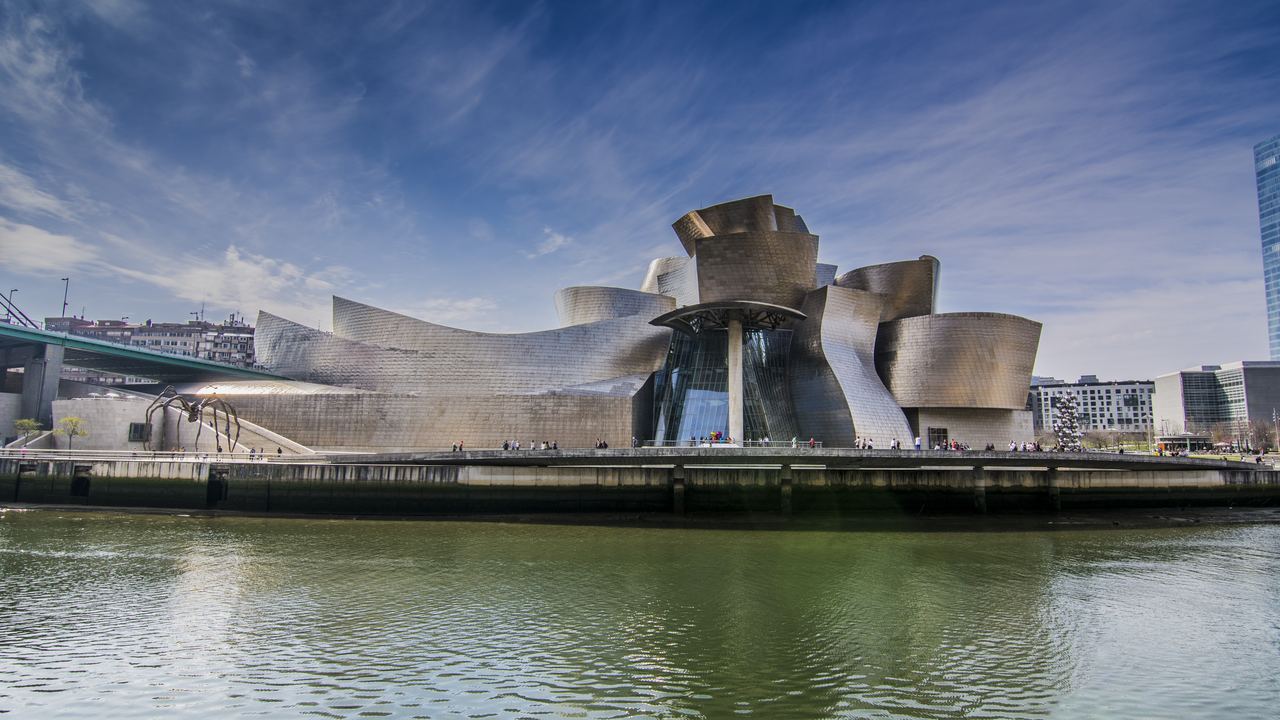
This page answers the questions people actually ask before visiting the Guggenheim museums in New York, Bilbao and Venice, plus Abu Dhabi, which is not open yet. Each answer is short and points to the page where we go deeper. guggenheim.museum is independent and not affiliated with the museums or the Solomon R. Guggenheim Foundation, and every rule below was checked on 3 November 2026. Prices live in one place, our tickets page, so the answers here say “the adult ticket” and send you there.
Three habits settle most of these questions. Check the museum's own page for hours, because they move. Match the format to the question: an admission ticket, a guided tour and a pass are three different products. And never assume one museum's rule applies to another, since bag sizes, photo rules and free days differ at each site.
The Guggenheim museums share a name, not a rulebook. A rule that holds in New York can be wrong in Bilbao or Venice.
| At a glance | New York | Bilbao | Venice |
|---|---|---|---|
| Building | Frank Lloyd Wright's spiral rotunda, opened 21 October 1959 | Frank Gehry's titanium, limestone and glass building, opened October 1997 | Palazzo Venier dei Leoni on the Grand Canal, a house museum since 1980 |
| Known for | Spiral ramp, Thannhauser Collection, UNESCO listing (2019) | Richard Serra's The Matter of Time, Koons's Puppy, the Bilbao effect | Peggy Guggenheim's collection, sculpture garden, Cubism and Surrealism |
| Weekly closing | No weekly closing listed; a few dated closures | Closed Mondays on most dates | Closed Tuesdays and December 25 |
| Audio guide | Free digital guide (app) | Included in every ticket | Sold at the ticket office, five languages |
| Bag limit | 22 x 14 x 9 inches, free coat check | Under 35 x 35 cm in the galleries | No large items such as bags or backpacks; free lockers at the ticket office |

Tickets and entry: booking, free days and passes
Do I need to book Guggenheim tickets in advance?
In New York the museum sells tickets at its welcome desk, but it recommends buying ahead, and it is stronger about that for the pay-what-you-wish window, where only a limited number of tickets are sold on site. In Venice the museum advises buying online and choosing an entry time slot until they run out. Bilbao's own page sets no advance-booking rule that we found. Details by site are on our tickets page.
How much is a Guggenheim ticket?
It depends on the museum, and every number here changes, so we keep them in one place. As we checked on 3 November 2026, the adult ticket was priced in dollars in New York and in euros in Bilbao and Venice, and New York's was the highest of the three. Student, senior and under-age rates differ at each museum. The current figures, with the date we checked them, live on the tickets and discounts page.
When is the Guggenheim free?
New York runs a pay-what-you-wish window in the late afternoon on two days a week, and many guides still print an older schedule, so check the museum's own page before you plan around it. Bilbao has no recurring free day; its one free weekend, in October 2025, was a one-off. Venice is free for children under 10, and its Thursday afternoon slot is for residents. The full list of free tiers is on the tickets page.
How does pay-what-you-wish work at the Guggenheim in New York?
For a set window near closing time, visitors name their own price instead of paying the full adult fare. The museum sets a suggested amount and a minimum, strongly recommends reserving ahead, and releases only a limited number of tickets at the door. Because the days and hours have moved before, we do not print them in the text of this FAQ; the dated schedule is on our tickets page. Expect the galleries to be busier in that window.
Can I get a refund on a Guggenheim ticket?
At Bilbao the answer is stated plainly: no refunds for tickets already issued. For New York and Venice we found no refund rule on the museums' own pages, so assume the seller's terms apply. A reseller sets its own cancellation policy, and a tour that includes admission is a different product from an admission ticket. Read the terms before paying. Our guide to telling the two apart is How to choose the right Guggenheim tour.
Is a city pass worth it for the Guggenheim?
Only if you would visit the other attractions anyway. The New York museum says it accepts CityPASS, Go City, New York Pass and Attraction Pass, and CityPASS lists it as one of five attractions you pick from, with the architecture tour included. A pass saves money when you use most of its slots, not when the Guggenheim is the only reason you bought it. Run the arithmetic with current prices on the tickets page.
Does one ticket cover more than one Guggenheim museum?
No. Each museum sells its own admission and none of the three open sites shares a ticket with another. There are narrower deals: Bilbao sells a combined ticket with the city's Museo de Bellas Artes, Venice discounts entry for visitors holding a ticket from three nearby Dorsoduro museums, and Venice lists members of any Guggenheim museum as free. Prices and conditions are on the tickets page.
Is it safe to buy Guggenheim tickets from a third party?
It is safe if you know what you are buying. A reseller sells either an admission ticket or a guided tour that includes admission, on its own terms. Bilbao's legal page expressly prohibits online ticket scalping, which is one more reason to read what the listing includes. This site is independent and earns a commission when you book a partner's tour; we explain the difference between a ticket and a tour in What Guggenheim tours actually include.
Time is the question that gets the most contradictory answers online, because nobody says what they are counting. Count the exhibition, the building walk and any tour separately and the estimates stop clashing.
Visiting and time: how long, when and which museum
How long do you need at the Guggenheim?
None of the three museums publishes a recommended visit length; New York says there is no time limit. Visitor estimates vary: roughly 1.5 to 4 hours in New York, 1 to 3 in Bilbao, 75 to 150 minutes in Venice. Our planning figure, which is editorial judgment, is about two hours in New York, two to three in Bilbao and one and a half to two in Venice. A day-by-day plan for each city is in our itineraries.
Is the Guggenheim worth visiting?
For the building, yes in New York and Bilbao, where the architecture is the main event. For the collection, it depends on what you like: New York is strong on early modern art and the Thannhauser gift, Venice on Cubism, Surrealism and abstraction, Bilbao on large contemporary installations. If you only care about old masters, none of them is your museum. We compare the three by traveler type in Which Guggenheim should you visit?.
What is the best time of year to visit?
Spring and early fall suit most travelers. By the 1991-2020 climate normals, April, May, September and October are the easy months in New York, May, June and September in Bilbao, and April, May and September in Venice. Bilbao's wettest month is November. Indoors, any month works, so the real question is the weather around the museum. Month-by-month charts are in Best time to visit.
Which Guggenheim should I see if I only have time for one?
Pick by what you want from the trip. Choose New York for Wright's spiral and the Thannhauser Collection, Bilbao for Gehry's titanium building and Richard Serra's steel, Venice for Peggy Guggenheim's palazzo, her garden and a compact, personal collection. If you are already in one of the three cities, the choice is made for you. Our side-by-side comparison, and how not to compare them, is here.
Is the Guggenheim open every day?
As of 3 November 2026, New York lists daily opening, with a handful of dated early closings and full-day closures such as Thanksgiving and December 25. Venice is closed on Tuesdays and December 25. Bilbao is open Tuesday to Sunday, with Monday openings on listed dates, including every Monday from mid-June to early September in 2026, and closes on December 25 and January 1. Current hours are on the New York, Bilbao and Venice pages.
Can I leave the Guggenheim and come back in?
We could not find a re-entry policy on any of the three museums' pages, so we will not invent one. Ask at the ticket or information desk before you step out, and keep your ticket in hand. In New York, remember that everyone goes through a security check on arrival, even with a ticket in hand, so a re-entry may mean passing through it again. Practical rules for each site are collected in What to bring.
What can I combine with the Guggenheim nearby?
In New York the museum sits on Museum Mile: the Metropolitan Museum is about six blocks south, the Neue Galerie two, and Central Park is across Fifth Avenue. In Bilbao, the Museo de Bellas Artes has a combined ticket and the old town is across the river. In Venice the Gallerie dell'Accademia, Palazzo Cini and Punta della Dogana are the Dorsoduro partners. Walking orders are in our itineraries.
Is it worth traveling to Bilbao just for the Guggenheim?
Many people do, and the building alone justifies a half day. Bilbao has an airport and sits roughly an hour and a quarter by road from San Sebastián. The Madrid-Bilbao train takes around four and a half to five hours depending on the source, so a day trip from Madrid is a long one. If you go, add the old town and a pintxos crawl. Transport details are in Getting to the Guggenheim.
New York: the spiral, the building and the rules
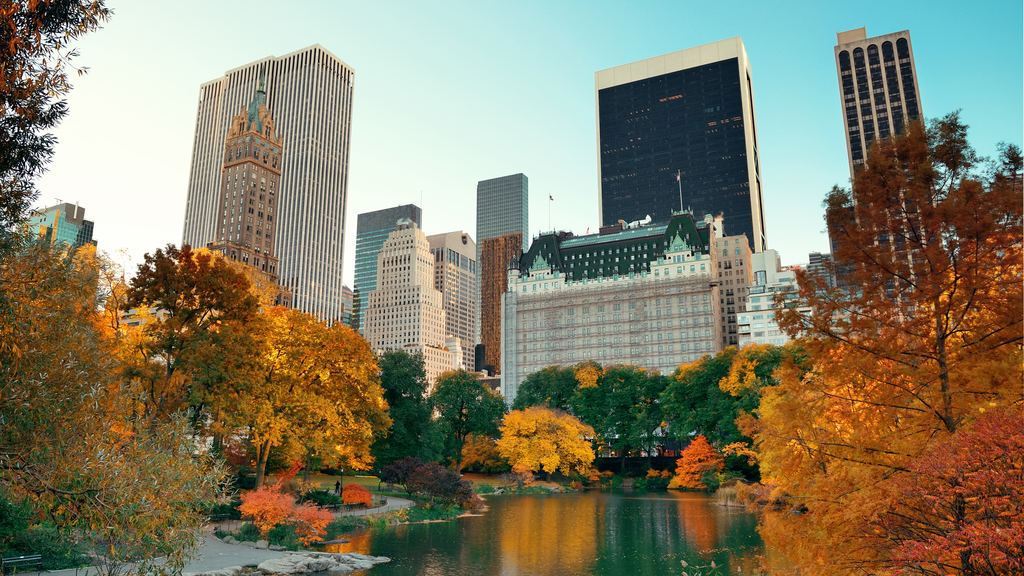
Why do you walk down the ramp at the Guggenheim in New York?
It was Wright's intention. The museum's visitor guide says he imagined visitors experiencing the building from the top down, riding a glass elevator to level six and then walking the spiral. That is a design idea the museum reports, not a rule or a recommendation, and many current exhibitions are laid out from the bottom up. Do whichever suits your legs. The story of the design is in Frank Lloyd Wright's Spiral.
How long and steep is the ramp?
The museum describes the rotunda's spiral ramp as a quarter mile long, climbing steadily at a three-degree incline, which works out to a grade of roughly 5 percent. Degrees and percent are different units, which is where the wrong figures online come from. The museum also says works are hung at a slight tilt that looks straight to the eye. We separate the figures that are official from those that are not in Myths and curiosities, fact-checked.
What is the Guggenheim building in New York made of?
Sprayed concrete, not stone. The outer walls are Gunite, a mix of sand and cement also used for tunnels and swimming pools, about five inches thick. Marble appeared in Wright's early 1945 schemes and was dropped. The color has changed too: Wright chose a warm yellow-brown, and the building has been light gray since the 1990s, a choice New York's Landmarks Preservation Commission upheld in 2007. More construction history is in our guide to the spiral.
Is the Guggenheim in New York wheelchair accessible?
Mostly. The museum says every level is reachable by elevator except the High Gallery, which has two low steps at its entrance and can be partly seen from rotunda levels 1 and 2. Standard manual wheelchairs are free and need no reservation; ask a security guard at the entrance. Motorized wheelchairs are allowed. Accessibility details for all three museums are collected in The Guggenheim with kids, and accessibility.
Can I bring a stroller to the Guggenheim in New York?
Yes. The museum's FAQ allows strollers and soft, front-facing carriers. It does not allow toddler carriers or baby backpacks, and adults may not carry children on their shoulders. A limited number of strollers can be borrowed at the coat check. Some third-party sites still say strollers are banned; the museum's own page says otherwise. More family rules, checked 3 November 2026, are in our family page.
What is the Thannhauser Collection, and is it always on view?
It is a gift of Impressionist, Post-Impressionist and early modern works from the dealer Justin Thannhauser, announced in 1963 and completed by his bequest, and the museum lists it as an ongoing display. It presents the collection as bringing in Degas, Manet, Van Gogh and about thirty Picassos. Which individual works hang in the galleries on a given day can change, so treat any list as a hint, not a promise. For how it fits with the rest, see What hangs where.
Is the Guggenheim in New York a UNESCO World Heritage site?
Yes, as one of eight buildings by Frank Lloyd Wright inscribed together in 2019 as “The 20th-Century Architecture of Frank Lloyd Wright.” That makes the claim you will see online, that it is the only modern American building on the list, wrong. The other seven include Fallingwater, Taliesin and Unity Temple. UNESCO's own page lists the components. We debunk more of these in Myths and curiosities.
Bilbao is the museum people argue about most. The Bilbao effect label is a journalist's coinage, so the answers below stick to what the museum and researchers can document.
Bilbao: Gehry, titanium and the Bilbao effect
Who designed the Guggenheim Bilbao, and when did it open?
Frank Gehry designed it. Construction ran from October 1993 to October 1997, and the museum opened in October 1997. Gehry's team used CATIA, software borrowed from aerospace engineering, to turn the shapes into buildable structure. Gehry died on December 5, 2025. The museum is run by a Basque foundation in partnership with the Solomon R. Guggenheim Foundation. The full story, with the numbers checked, is Gehry's Bilbao and the Bilbao effect.
What is the Guggenheim Bilbao covered in?
Titanium, limestone and glass. The museum counts about 33,000 thin titanium sheets, with a rough finish that shifts color with light and weather. We do not quote a sheet thickness, because we could not source one. Inside, three levels wrap around a central atrium, connected by curved walkways, glass elevators and stairs. The building is the reason many visitors come, and our Bilbao guide explains how to look at it.
What is the dog covered in flowers outside the Guggenheim Bilbao?
That is Puppy by Jeff Koons, made in 1992 from stainless steel, soil and flowering plants, and standing in front of the museum. The wooden first version was shown at Documenta IX in 1992; the steel structure was installed in Bilbao in 1997. Koons's Tulips is in the collection but the museum's own page says it is currently not on view, so do not plan around it. See What hangs where.
What is the Fire Fountain at the Guggenheim Bilbao?
It is by Yves Klein, not Anish Kapoor, as some pages claim. Five fountains of fire burn in a basin by the river, for one minute every 15 minutes in an evening window that shifts through the year, from early evening in winter to after 21:00 in summer. Check the museum's page for the current window. Kapoor's piece outside is Tall Tree & The Eye. More outdoor works are in our collections guide.
Is the Guggenheim Bilbao in the old town?
No. It stands on the bank of the Nervión estuary at Avenida Abandoibarra 2, in the district of Abandoibarra. The old town, the Casco Viejo with its Siete Calles, is a walk across the river. The museum's own directions point to Moyua metro, exit “Ercilla-Guggenheim,” and the tram stop named Guggenheim. It has no visitor car park. All the routes are in Getting to the Guggenheim.
What is the Bilbao effect, and is it real?
It names the idea that one landmark museum can revive a city. The evidence is mixed. Researchers note that the term was coined by journalists and that Bilbao's rebirth also rested on a new metro that opened in 1995, a riverfront cleanup and other projects. The museum's own impact figures are its estimates, not independent audits. It counted 1,305,003 visitors in 2025. We lay out the claims and the limits in Gehry's Bilbao and the Bilbao effect, checked.
Venice: Peggy's palazzo, the garden and the tides
Where is the Peggy Guggenheim Collection and how do I get there?
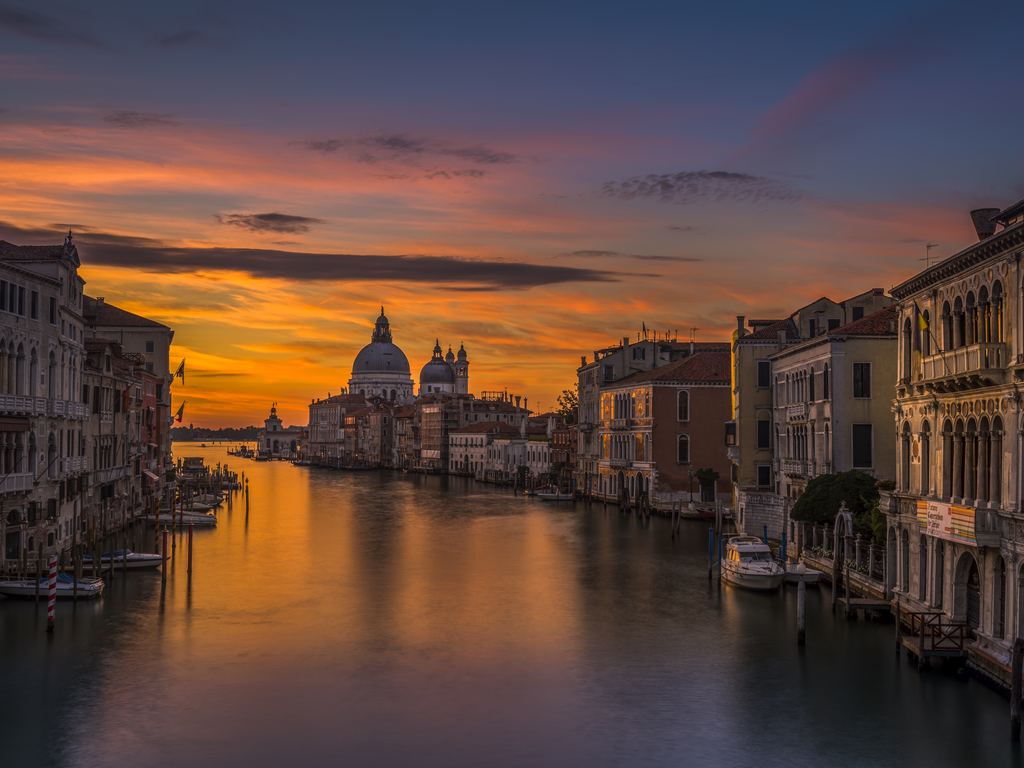
It is in the Palazzo Venier dei Leoni, Dorsoduro 701, on the Grand Canal between the Accademia bridge and the Salute church. The museum points to vaporetto lines 1 and 2 to Accademia, and line 1 also stops at Salute. You enter from the land side, not from the canal. Station and airport connections, with the caveat that fares change, are in Getting to the Guggenheim and on the Venice page.
Who was Peggy Guggenheim, and when did she buy the palazzo?
Peggy Guggenheim was born in New York on August 26, 1898. She bought the palazzo and its garden in July 1949, not 1948 as some pages say, and lived there for about thirty years. From 1951 she opened it free of charge three afternoons a week, from Easter to November, and she died in 1979. The collection became a Guggenheim Foundation museum in 1980. Her life and the palace are covered in our Venice section.
Why is the palazzo so low?
It was never finished. The Venier family commissioned architect Lorenzo Boschetti in 1749, and only the first of five planned floors was built, which is why the Istrian-stone facade sits low on the water. The museum says the name probably comes from the stone lion heads on the facade; the story of a live lion in the garden is only “said.” We check more of these tales in Myths and curiosities.
Can I see Pollock's Mural or Dalí in Venice?
Not Mural: Peggy first offered it to the University of Iowa in 1948, and it arrived there in 1951. Dalí is represented in the collection but, as we checked on 3 November 2026, no Dalí work was on view. What you can look for are Magritte's Empire of Light, Brancusi's Maiastra, Max Ernst's Attirement of the Bride, de Chirico's The Red Tower and Picasso's The Studio. See Ten works to find in the Peggy Guggenheim Collection.
Does the Peggy Guggenheim Collection close for acqua alta?
The museum publishes no high-water policy in the pages we read, so we will not claim one. High water is an autumn and winter event: since 1872, October to December holds about 71 percent of floods above 110 cm, and the series shows none in July or August. The MOSE barrier has protected the historic center since 2020. Boat schedules do change when tides rise. See Best time to visit for the monthly chart.
Do I have to pay Venice's day-trip access fee?
As of 3 November 2026 the 2026 trial had ended and the fee did not apply. The city has published 72 dates for 2027, from March 26 to August 15, but had not announced the amount when we checked. Press reports of the 2026 scheme described exemptions for overnight guests, so confirm the rules on the city's own site before you go. Our getting there page will carry the current rule.
Everything in this section is provisional. The opening date is an announcement, not a fact on the ground, and we review these answers after the museum opens.
Abu Dhabi: what is open and what is not
Is the Guggenheim Abu Dhabi open yet?
No. As of 3 November 2026 the museum is not open. Abu Dhabi's Department of Culture and Tourism announced an opening on Friday, December 11, 2026, and tickets have been on sale since September, according to press reports. Hours, the opening exhibition and visitor rules had not been published when we checked, and the official site was still showing placeholder pages. We keep the known and unknown apart in Guggenheim Abu Dhabi: what we know.
How big is the Guggenheim Abu Dhabi, and who designed it?
Frank Gehry designed it, on Saadiyat Island. The tourism department says the building rises to 88 metres with ten sculptural cones, and calls it the largest Guggenheim in the world at 80,000 square metres in total. The same page says both 28 and 30 galleries, so we do not give a single count. Press called it one of Gehry's last major projects. Details are in our Abu Dhabi page.
Can I visit Guggenheim Abu Dhabi on a trip to Abu Dhabi?
Once it opens, yes: it stands in the Saadiyat Cultural District, on Saadiyat Island, near the Louvre Abu Dhabi. We found no published drive times, parking terms or public transport directions when we checked. Prices and rules reported in the press are provisional until the museum posts its own, so plan with this page and check before you book.
How many Guggenheim museums are there?
Three are open today: New York, Bilbao and the Peggy Guggenheim Collection in Venice. Abu Dhabi would make four. The Foundation's own history page names only those, plus Abu Dhabi, and drops earlier branches: SoHo, Berlin, Las Vegas and the Hermitage venue closed, and Helsinki was rejected twice. The Guggenheim Foundation also owns the US Pavilion at the Venice Biennale. The closures are explained in The Guggenheim branches that closed.
Tours: guides, skip-the-line and day trips
Do I need a guided tour at the Guggenheim?
Often not. New York offers a free digital guide through an app, so bring headphones. Bilbao includes an audio guide in every ticket. Venice sells audio guides at the ticket office, in five languages. A guide earns its fee when you want the architecture or the art history explained by a person, or when you are on a tight schedule. Our decision tree is How to choose the right Guggenheim tour.
Does a “skip the line” tour let me skip security?
No. Security screening in New York applies to every visitor, with or without a ticket, and we found no museum statement promising a zero wait at any of the three sites. “Skip the line” on a reseller listing describes the seller's product, not a museum policy. What the listing includes is the thing to check, and What Guggenheim tours actually include shows you what to look for.
Can I bring my own guide to the Guggenheim Bilbao?
Yes, with conditions. For groups of eight or more with their own guide, the museum offers a free service but reservation is required: entry is in one-hour slots, with about five minutes per room, and the museum may refuse access without a booking. Recording the visit is prohibited. Larger groups of more than 20 should book tickets at least a week ahead. See our Bilbao guided tours and the tour chooser.
Are Basque Country day trips from Bilbao worth adding?
They are the best use of a second day. Gaztelugatxe, the island hermitage reached by 241 steps, takes around an hour and a half on foot, and a free ticket is compulsory in high season, on holidays and on long weekends. Guernica is a train ride away. Pick a day trip around the weather and the access rules. Our options are in Basque Country day trips and Bilbao city and architecture tours.
Where do I find Guggenheim tours on this site?
Each museum has its own page. New York tours are under the New York section, Venice under the Peggy Guggenheim Collection page, and Bilbao is split into guided tours with admission, city and architecture tours and Basque Country day trips. We do not sell the tours ourselves; partner companies run them, and we explain what each format includes in this dossier.
Practical: photos, bags, food, kids and clothes
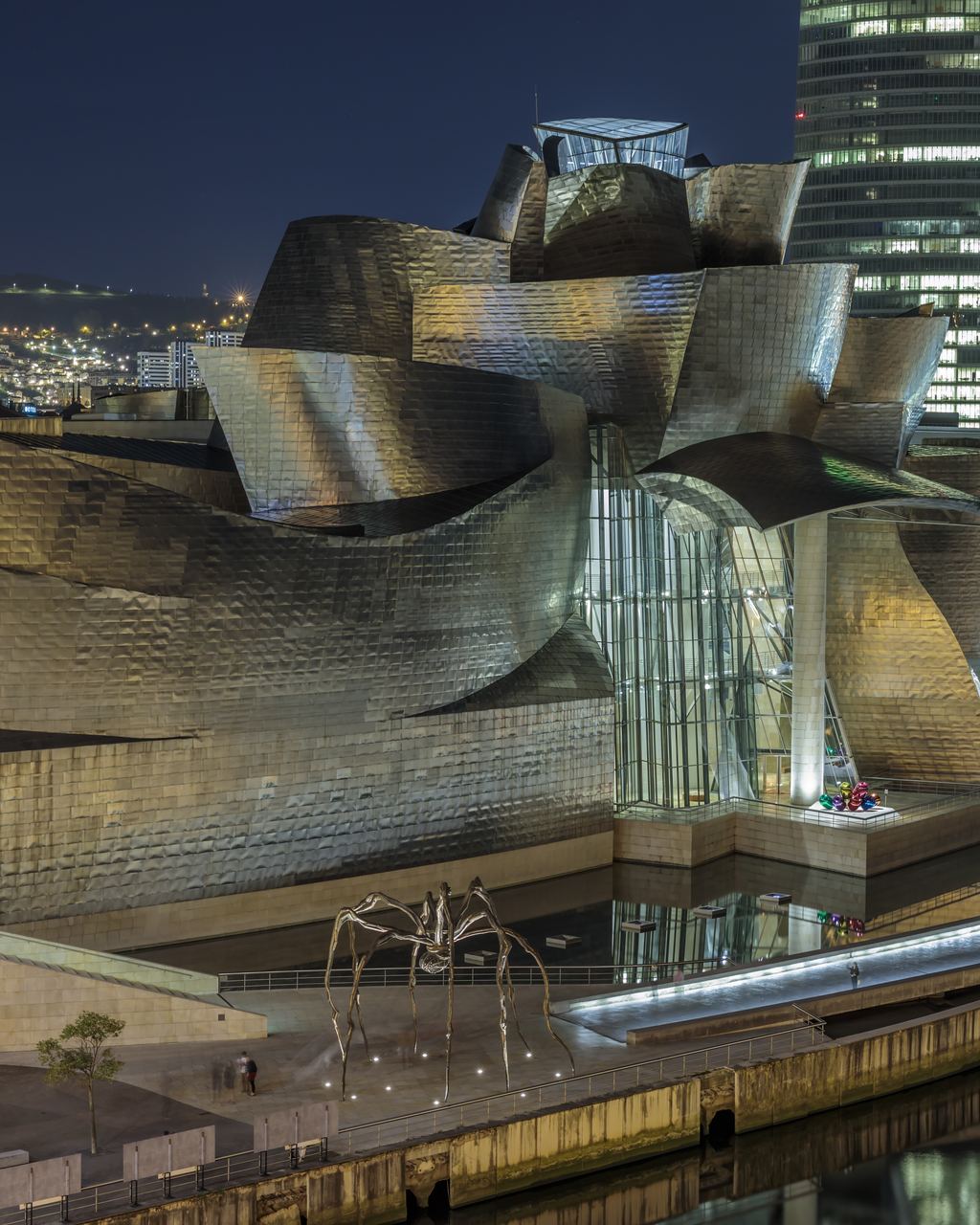
Can I take photos in the Guggenheim museums?
Yes, for personal use and without flash, unless a gallery sign says otherwise. Tripods are banned at all three; New York bans camera extension poles, Bilbao and Venice ban selfie sticks. New York and Venice allow sketching in pencil, but pens, paints and easels are out. The museums do not mention video. Checked 3 November 2026; the full rules are in What to bring.
What bags are allowed in the Guggenheim museums?
New York: nothing larger than 22 x 14 x 9 inches, and such items cannot even be checked; backpacks and long umbrellas must be checked at the free coat check. Bilbao: belongings under 35 x 35 cm in the galleries, with no large bags or umbrellas. Venice: no large items such as bags, backpacks or suitcases, with free lockers at the ticket office. Our packing list is in What to bring.
Can I bring food or drink into the Guggenheim?
Mostly no. New York allows only personal water bottles, and sells food at Café Rebay. Bilbao forbids eating and drinking in the galleries; it has a bistro and the Michelin-starred Nerua. Venice forbids food and drink in the whole museum, garden included, and its Museum Bistrot is open only to ticket holders. Nearby places to eat are in our itineraries.
Are pets or service animals allowed at the Guggenheim?
New York's visitor pages do not mention animals; service animals are generally covered by the ADA, so confirm with the museum. Bilbao admits guide dogs and prescription pets, and no other animals. Venice welcomes service and certified therapy animals but not pets, and mentions a dog-sitting service run by a partner. If you travel with a companion animal, plan where it will wait. Mobility and sensory access rules for all three sites are in The Guggenheim with kids, and accessibility.
Is the Guggenheim good for kids?
It works for most ages if the visit is short. New York admits children free, though the museum words the cutoff two ways, “under 12” and “12 and under,” so ask at the desk. Bilbao admits under-18s free, and Venice under-10s, which also gets a free activity booklet, The Key to Peggy Guggenheim's Home. Family programs are in our family page.
What should I wear to the Guggenheim?
Comfortable shoes, because New York's ramp is a quarter mile and Venice means walking. Bilbao advises layers in summer because the interior stays cool. Venice turns away visitors who are shirtless, in swimwear or barefoot. Beyond that, no museum posts a dress code. Umbrellas are the other trap: long ones must be checked in New York and are not allowed in Bilbao's galleries. See What to bring.
Still deciding what to book?
If these answers did not settle it, start with which museum and when, then choose a format. Our trip-planning hub puts the eight decisions in order, and the tour chooser tells you when a guide is worth paying for and when it is not.
Plan the whole trip
Eight decisions in order, from which museum to what to bring.
Guggenheim tours in New York
Guided visits and tickets from our partners, shown without prices here.

Electric Pedicab NYC Tour With Flexible Stops, Times Square to Fifth Avenue
The driver is the guide and the route is open: riders add or skip stops between Times Square, Fifth Avenue, Rockefeller Center and the Empire State Building.
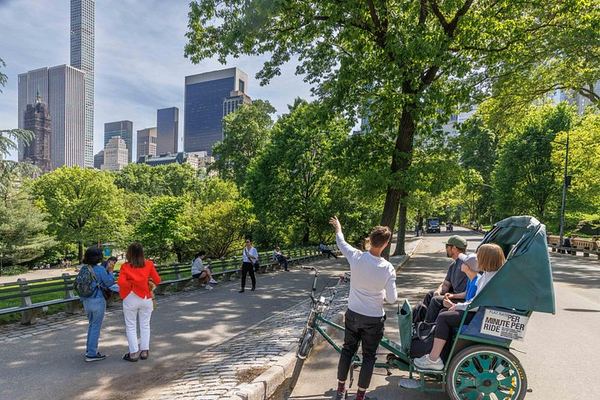
Guided Pedicab Tour of Celebrity Homes and Film Locations Around Central Park
Guides point out who lived where around the park, from the Dakota to the Essex House, and which scenes were shot at the Boathouse, Bow Bridge and the Plaza.
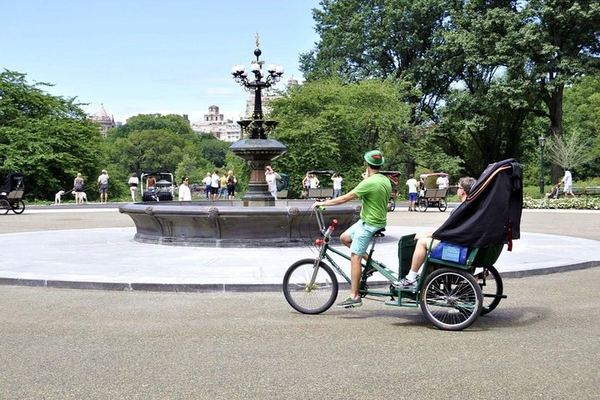
Private Central Park Pedicab Tour With Walking Stops, 1 to 3 Hours
A private pedicab ride through Central Park with 5-minute walking stops at Strawberry Fields, Bethesda Fountain and Bow Bridge, in 1, 2 or 3 hour versions.
Ratings collected by Viator and Tripadvisor
Data verified on . Rules and dates checked 3 November 2026 on the museums' own pages; see our editorial policy. Editorial Policy