
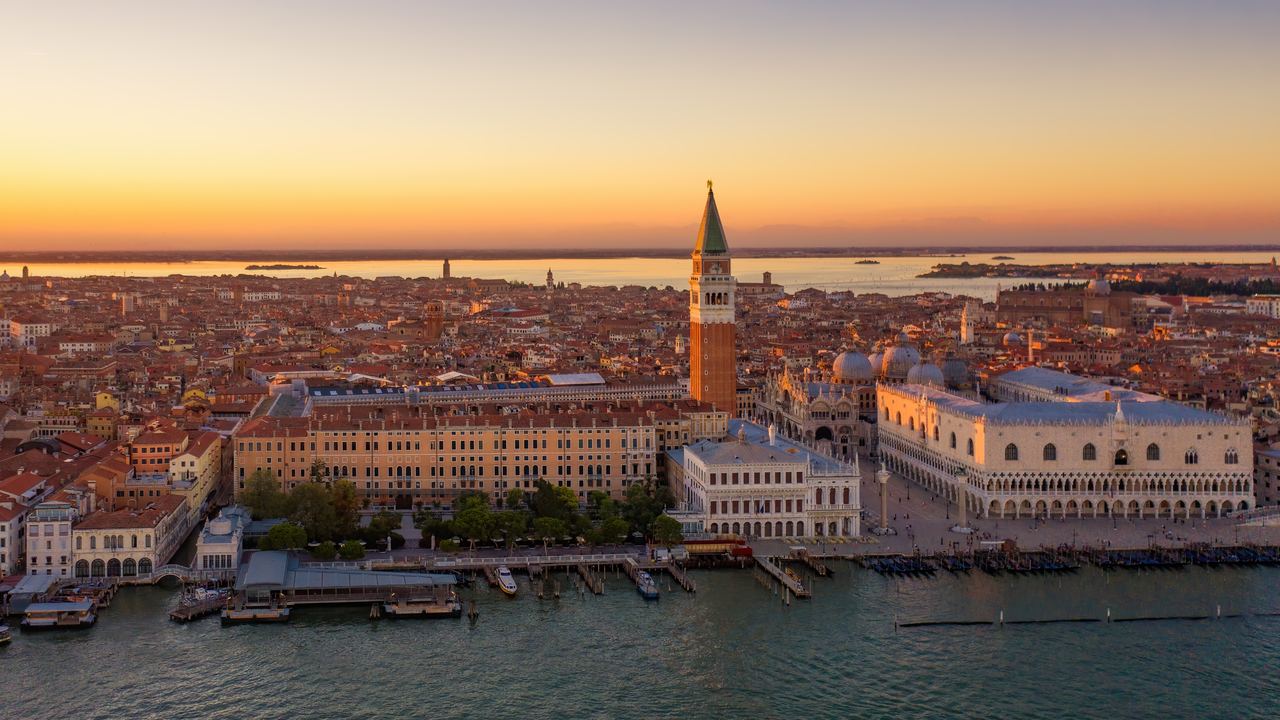
What hangs where? The Guggenheim museums do not share one rotating collection. New York holds the Foundation's core: Kandinsky and early abstraction, the Thannhauser Impressionists and Post-Impressionists, and later minimalist and conceptual work. Venice is Peggy Guggenheim's own collection of Cubism, Surrealism and abstraction, plus a later gift of postwar art. Bilbao has a collection of its own, heavy on large sculpture and installations made for a building that can take them. This page compares the three and lists what you will not find, so you do not cross an ocean for a picture that is in storage. Practical details are on our pages for New York, Venice and Bilbao. This site is independent and not affiliated with the museums or the Solomon R. Guggenheim Foundation.
Is the Guggenheim one collection shown in three places?
No, although the name suggests it. The New York Landmarks report on the Wright building states that Peggy Guggenheim's collection, willed to her uncle Solomon's Foundation, remained in Venice, and that pieces from the two groups have been brought together only for exhibitions. After her death on December 23, 1979, the Venice museum opened in 1980 as a museum of the Foundation. It has its own holdings, its own gardens and its own story.
Bilbao is a different case again. Its works carry the credit line "Guggenheim Bilbao Museoa," and in a 1998 interview with The Art Newspaper, Thomas Krens, then director of the Foundation, said the Foundation chooses the acquisitions but the title sits with a holding company created in Bilbao. The 20-year renewal agreed in 2014, which runs to 2034, provides for an exhibition from the New York collection in Bilbao every two years. A peer-reviewed 2023 article in Curator by Lorente argued that New York kept most of its collection in storage and that works were rarely rotated out of Manhattan. That is a critic's view, and we cite it as one.
Think of three museums with three collections, linked by a name, a management agreement and occasional loans. Plan around the building you are visiting, not around an artist's name.
What does the New York collection hold?
New York is the oldest and the broadest, and it was built in layers. The museum's own history starts with Solomon Guggenheim and his adviser Hilla Rebay, who from 1930 collected what they called non-objective art. In Dessau that year Solomon bought Kandinsky's Composition 8 (1923), the first of more than 150 Kandinsky works to enter the collection. Part of Rebay's own holdings, which came to the Foundation at her death in 1967, added Bauer, Calder, Gleizes, Kandinsky, Klee, Mondrian and Schwitters.
Other collectors changed the shape of it. The Foundation bought the Nierendorf estate in 1948: Expressionists, Surrealists and early Abstract Expressionists. Justin K. Thannhauser's gift, announced in 1963, brought Degas, Manet, Van Gogh and about thirty Picasso; the museum itself writes "more than thirty" on one page and "almost thirty" on another, which is why we say about. The Thannhauser works also include Cézanne and Gauguin in the collection database, but that listing says whether a work belongs to the collection, not whether it is hanging today.
Later gifts reached further. According to Wikipedia, which we use here for dates we could not trace to a museum page, the Panza acquisitions of 1990 to 1992 added minimalism and conceptual art, and the Robert Mapplethorpe Foundation's gift of the early 1990s added about 200 photographs. The same source says the Foundation sold works by Kandinsky, Chagall and Modigliani in 1990 to pay for part of the Panza deal, a decision that drew sharp criticism at the time.
| Core | Arrived | What it brought |
|---|---|---|
| Solomon R. Guggenheim and Hilla Rebay | From 1930 | Non-objective art; Kandinsky's Composition 8 and more than 150 works by him in all |
| Karl Nierendorf estate | 1948 | Expressionists, Surrealists, early Abstract Expressionists |
| Hilla Rebay estate | After 1967 | Bauer, Calder, Gleizes, Kandinsky, Klee, Mondrian, Schwitters |
| Justin K. Thannhauser | Gift announced 1963 | Degas, Manet, Van Gogh and about thirty Picasso, shown as an ongoing display on level 2 |
| Giuseppe and Giovanna Panza | 1990-92* | Minimalism and conceptual art: Judd, Flavin, Andre, Weiner and others* |
| Robert Mapplethorpe Foundation | Early 1990s* | About 200 photographs* |

What does the Peggy Guggenheim Collection hold in Venice?
A collector's eye, not a survey. Peggy bought fast, and said so: her motto in 1939-40 was "Buy a picture a day." She opened Art of This Century in New York on October 20, 1942, then took the collection to the Greek pavilion of the 1948 Venice Biennale, where 136 works were shown, among them paintings by Gorky, Pollock and Rothko (the museum's page names these three). She bought the Palazzo Venier dei Leoni in July 1949 and lived there until her death.
The works the museum names on its object pages, which we checked on November 3, 2026, read like a list of interwar modernism: Magritte's Empire of Light, Brancusi's Bird in Space, Max Ernst's Attirement of the Bride, de Chirico's The Red Tower, Picasso's The Studio, Kandinsky's Upward, Giacometti and Calder. Three Pollock paintings from the mid-1940s are listed as on view. For ten of them in detail, see our page on ten works to find in the Peggy Guggenheim Collection.
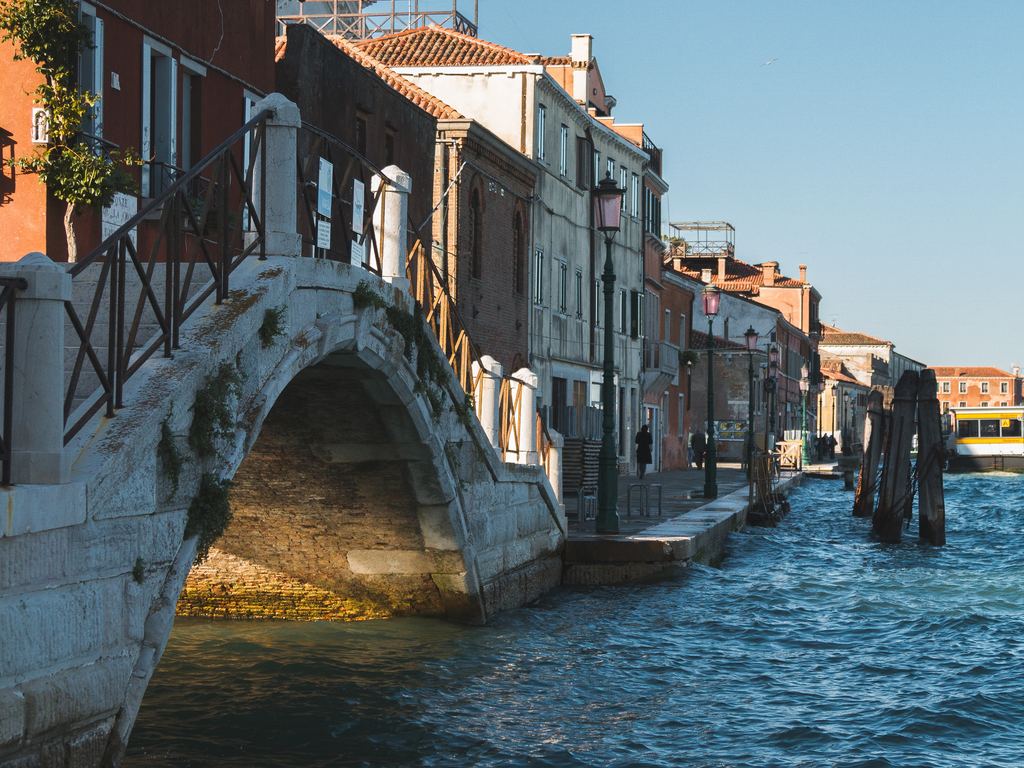
Venice also has a garden and a second collection
Two things sit beside Peggy's own holdings. The first is the Nasher Sculpture Garden, extended in 2001 with new sculptures by Flanagan, Holzer, Nivola and Paladino. The second is the Hannelore B. and Rudolph B. Schulhof Collection, shown in the barchessa, the low building along the garden. Wikipedia puts the gift at about 80 works, donated in 2012; the museum's accessibility page names the barchessa as the Schulhof's home.
Venice is the smallest of the three collections and the one most shaped by one person's taste. That is its appeal, and its limit: no Impressionists, no minimalism, and no giant installations. Those belong to the other two.
What does the Bilbao collection hold?
Bilbao's collection is younger and designed around a building. Gehry's galleries are large enough for work that most museums cannot house, and the museum's own pages list the result: sculpture, much of it outdoors. In front of the building stands Jeff Koons's Puppy; Louise Bourgeois's Maman (1999) is nearly nine meters tall; Anish Kapoor's Tall Tree & The Eye (2009) uses 73 reflective spheres; Daniel Buren's Arcos rojos sits on the La Salve bridge; and Yves Klein's Fire Fountain lights up in the evening. The museum posts its fire times by season, so check them for your date.


What is under the bridge, and what is inside?
The longest-running draw inside is Richard Serra's The Matter of Time (1994-2005): eight Corten steel sculptures, from a double ellipse to a spiral, in Gallery 104, a column-free space beneath the La Salve bridge. The work is a permanent part of the collection; Serra died in 2024. Eduardo Chillida's alabaster How Profound Is the Air (1996) is in Gallery 305.
The collection also leans local. A 2022 study cited by Lorente puts works by Basque artists at 28.22 percent of the collection catalog. The museum says the building has 20 galleries on three levels around the atrium.
What can you no longer see?
Three names come up most when travelers ask. Each is a different kind of absence.
- Koons's Tulips in Bilbao. The museum's own page for the work says it is "currently not on view." Some visitors expect a colorful outdoor piece; this is not it, and Bilbao's accessibility page still lists it among the tactile models offered to visually impaired visitors, so the two pages disagree.
- Pollock's Mural in Venice. It never was there. Peggy commissioned it in July 1943 for the entrance of her New York apartment and gave it to the University of Iowa, where it remains (the Venice museum dates the gift to 1948; other accounts say 1951). Venice shows other Pollock paintings instead.
- Dalí in Venice. The museum holds Birth of Liquid Desires (1931-32) and an untitled 1931 work, but on November 3, 2026 both were marked "Not on View." A few other works, including Pollock's Enchanted Forest and The Moon Woman, Mondrian's Ocean 5 and Giacometti's Woman with Her Throat Cut, carried the same status that day.
These statuses change. A work that is off view this week can come back at the next rotation, which is why we date the check.
How do the collections divide the history of art between them?
Less cleanly than the guidebooks suggest, and with overlaps at the edges. Picasso is in New York through the Thannhauser gift and in Venice through The Studio and On the Beach. Kandinsky is in both. Surrealism lives in Venice first, with New York holding Nierendorf's Surrealists. Our reading of the works each museum names runs like this:
- New York: the story of abstraction from Kandinsky onward, bracketed by Impressionism and Post-Impressionism on one side and 1960s minimalism and conceptual art on the other.
- Venice: the 1910s to the 1940s, a collector's version of Cubism, Surrealism and abstraction, ending with early Abstract Expressionism.
- Bilbao: sculpture and installation at a scale the others cannot show, with a regional strand.
For the movements behind these names, see our primer on art movements at the Guggenheim. A fourth venue, Guggenheim Abu Dhabi, is scheduled to open on December 11, 2026, so there is nothing to see there yet; we cover what is known in a separate page.
| Venue | Core | Strongest on | Will not find |
|---|---|---|---|
| New York | Solomon Guggenheim and Rebay, Nierendorf, Thannhauser, Panza, Mapplethorpe | Kandinsky (150+ works), Degas, Manet, Van Gogh, about thirty Picasso, minimalism, photography | Peggy's Surrealist and Cubist core; Bilbao's large outdoor sculpture |
| Venice | Peggy Guggenheim's collection, the Schulhof gift, the sculpture garden | Cubism, Surrealism and abstraction between the wars; Brancusi, Ernst, Magritte, Giacometti, Calder, early Pollock | The Thannhauser Impressionists; Pollock's Mural; Dalí (not on view on Nov 3, 2026) |
| Bilbao | Its own collection; credit line Guggenheim Bilbao Museoa | Large sculpture and installation: Serra, Chillida, Kapoor, Bourgeois, Koons's Puppy | Tulips (not on view); the Thannhauser Impressionists |
| Abu Dhabi | Planned venue; stated focus on modern and contemporary art | Not yet open | Anything: scheduled opening December 11, 2026 |
How do you check what is on view before you go?
The museums' websites make this harder than it should be. The artist pages on guggenheim.org list a painter's works across the whole Foundation and do not say whether they are in New York, Venice or Bilbao, or whether they are hanging. Pollock's Alchemy, The Moon Woman and Enchanted Forest all sit under his name there, and they are in Venice. The collection database for the Thannhauser works says what belongs to the collection, not what is on a wall. Here is a routine that works:
- Open the work's own page on the museum that holds it. Venice and Bilbao show a status such as "On view," "Not on View" or "Currently not on view."
- For New York, read the current Visitor Guide floor plan. It lists the Thannhauser Collection as ongoing and the Collection in Focus installations with end dates.
- Install the museum's free Digital Guide on the Bloomberg Connects app, which the Visitor Guide points to for exhibition and building content.
- For one must-see work, ask the museum. None of the Venice object pages we read gives a room.
- Do not plan from a list that says "in the collection." That phrase is a promise about ownership, not about the wall.
The Venice statuses in this article date from November 3, 2026. Treat them as a snapshot.
Guggenheim collections: quick answers
Is the Guggenheim one collection shown at several museums?
No. New York, Venice and Bilbao each hold their own works. Venice's collection stayed in Venice, and Bilbao's works carry a Bilbao credit line.
Where can I see Pollock's Mural?
Not at the Guggenheim. It was given to the University of Iowa (the Venice museum says 1948). Venice shows other Pollock paintings.
Is Koons's Tulips at Guggenheim Bilbao?
It is in the collection but the museum's page says it is currently not on view. Puppy, also by Koons, stands outside the building.
Does the Peggy Guggenheim Collection have a Dalí on view?
On November 3, 2026, the museum listed its two Dalí works as Not on View. Check the work's page before you go.
Which museum has the most Kandinsky?
New York, with more than 150 works. Venice has a Kandinsky too, Upward (1929).
Where are the Impressionists?
New York, mainly through the Thannhauser Collection (Degas, Manet, Van Gogh). Venice is built on Peggy's twentieth-century buying and Bilbao on large contemporary work.
Where is Serra's The Matter of Time?
In Gallery 104 at Guggenheim Bilbao, as eight Corten steel sculptures. It is a permanent work.
Does the museum website say where each work is?
Not on the artist pages, which cover the whole Foundation. Use the work's own page at the venue.
Keep reading
Ten works to find in the Peggy Guggenheim Collection
Ten works checked one by one, and how to look at them.
Art movements at the Guggenheim
Cubism, Surrealism, minimalism and the rest, tied to works in the collections.
Guggenheim Abu Dhabi: what we know
The fourth venue, with what is confirmed and what is only announced.
Tours and tickets for the Peggy Guggenheim Collection
Sold by third parties through affiliate links; each listing shows its own price.
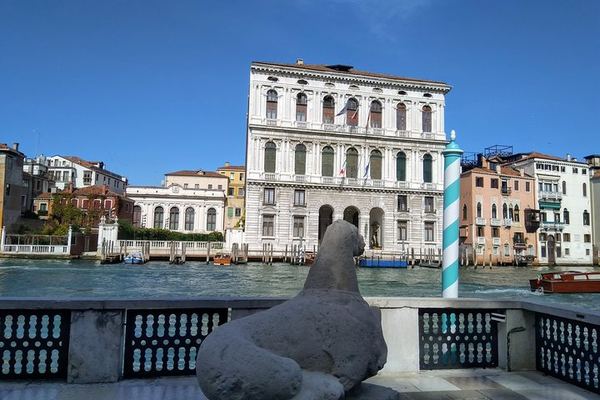
Private Peggy Guggenheim Art Historian Tour, Tickets Not Included, 2 Hours
A private two-hour tour led by an art historian, covering the garden and the Grand Canal terrace. Entry tickets are bought separately, ideally online.
Private Peggy Guggenheim Collection Tour with Skip-the-Line Tickets, Up to 6
A private guided visit to the Peggy Guggenheim Collection for up to six travelers, with skip-the-line tickets included and wheelchair access throughout.
Private Peggy Guggenheim Tour with Entry Ticket and Dorsoduro Walk, 2 Hours
Two hours with a private guide: entry ticket included, then a walk through Dorsoduro. Guiding in German, English, Italian, French or Spanish. Groups up to 15.
Ratings collected by Viator and Tripadvisor
Data verified on . Venice and Bilbao object pages, the NY Visitor Guide (Oct 2025) and the 1990 Landmarks report. Wikipedia only where marked. On-view statuses checked 3 Nov 2026. Editorial Policy