
Bring one small bag, a layer you can take off, comfortable shoes, a phone that holds a charge, and an ID if you are claiming a discount. That is the whole answer for most days. The rules differ by museum, though, and two of them can turn you away at the door. In New York an item larger than 22 x 14 x 9 inches cannot enter and cannot be checked. In Bilbao belongings should be under 35 x 35 cm (about 14 x 14 inches). In Venice large items such as suitcases and backpacks are not allowed, and security can refuse any item. We read each museum's own pages on 3 November 2026; this page labels what is a rule and what is our advice.
Rule or advice? If a line on this page says "rule", a museum publishes it. If it says "our advice", it is our judgment and nobody at the museum has said it.
What are the bag rules at each Guggenheim museum?
All three museums run a security check and all three reserve the right to refuse an item. Beyond that, the limits are different enough that a bag that works in one city fails in the next. The table sets them side by side; the paragraphs after it cover the details people trip over.
| Topic | New York | Bilbao | Venice (Peggy Guggenheim Collection) |
|---|---|---|---|
| Bag limit | Nothing over 22 x 14 x 9 in, wheels and handles included | Belongings under 35 x 35 cm | No large items: bags, backpacks, suitcases |
| Backpacks | Must be checked; if not, carried in hand or worn on the front | No large bags or backpacks in the galleries | Not allowed if large; any item can be refused |
| Where to leave things | Ground-floor coat check, free with admission (show your ticket) | Coat room (the page states no fee and may ask for your ticket) | Lockers at the ticket office, free |
| Umbrellas | Long umbrellas must be checked | No umbrellas in the galleries | Not mentioned on the page we read |
| Photos | No flash, personal use; no tripods or camera poles | No flash, private use; no tripods or selfie sticks | No flash, non-commercial; no tripods or selfie sticks |
| Food and drink | Outside food not allowed; personal water bottles are | No eating or drinking in the galleries | None inside, garden included |
| Strollers | Strollers and soft front carriers yes; toddler carriers and baby backpacks no | Strollers and carriers available to borrow; ask at the coat room | Strollers allowed |
New York: why a carry-on suitcase will not work
The New York limit has two edges. Anything above 22 x 14 x 9 inches (about 56 x 36 x 23 cm), wheels and handles counted, is refused outright and the coat check will not take it either. That rules out most cabin suitcases, so leave the bag at your hotel on a travel day. Below that size, backpacks, long umbrellas, musical instruments, scooters, skateboards and parcels must be checked. Ground-floor coat check is free with admission, and you present your ticket first. If you skip the coat check, a backpack goes in your hand or on your front. Electric bikes, scooters and unicycles are not permitted at all, in the galleries or the coat room, except mobility devices covered by the ADA.
We suggest a small crossbody or a tote. It saves a queue at the coat check, and you keep your phone and wallet on you.
Bilbao: the 35 cm limit and the umbrella clause
Bilbao's visitor tips ask you not to bring large bags, backpacks, parcels or umbrellas into the galleries and say your belongings should be under 35 x 35 cm. The coatroom page states no fee and says the museum may ask to see your ticket. The museum suggests arriving 15 minutes before a guided visit if you want to leave items at the coat room, so build that into a tour slot. Umbrellas are the awkward case: the visitor tips say none in the galleries, while the coatroom page rules out non-folding umbrellas, so a folding one is the safer choice and you should still expect to check it. Items over 60 x 45 cm are refused even at the coatroom. The sky in Bilbao will make you want one: the city has about 124 wet days a year, which our best time to visit page breaks down by month.
Venice: no suitcases, free lockers
The Peggy Guggenheim Collection says large items, such as bags, backpacks, suitcases or other large objects that could endanger the works, are not allowed, and security may refuse any item. Lockers in the ticket office are free. The page does not give locker dimensions, so we cannot tell you whether a roller case fits. It does not publish a luggage service either. If you arrive by train, plan to leave a large bag at your accommodation first; that is our advice, not a rule. A small shoulder bag is the safe choice. One more rule specific to Venice: visitors who are shirtless, in swimwear or barefoot are refused entry.
What should you wear to the Guggenheim in each season?
No museum publishes a dress code, apart from Venice's rule about swimwear and bare feet. Everything below is our advice, derived from the 1991-2020 climate normals we use on the best time to visit page. Temperatures are average highs and lows.
| Season | New York | Bilbao and San Sebastián | Venice |
|---|---|---|---|
| Winter (Dec-Feb) | 40 to 44 °F highs, 28 to 34 °F lows, 3 to 4 snow days a month in Jan and Feb. Wear a coat, hat and gloves; boots if snow is forecast. The coat check is free | 56 to 57 °F highs, 41 to 43 °F lows, 11 to 13 wet days. A waterproof jacket and a sweater beat a heavy coat | 46 to 49 °F highs, lows of 32 to 34 °F. Warm coat, scarf, shoes that tolerate wet pavement |
| Spring (Mar-May) | 50 to 71 °F highs. Layers: a light jacket and a sweater, since mornings are cold | 62 to 70 °F, 10 to 12 wet days a month. Rain layer plus a light sweater | 56 to 72 °F. A light jacket; May is the wettest month in our Venice table (80 mm) |
| Summer (Jun-Aug) | 80 to 85 °F highs, 64 to 70 °F lows. Light clothes and a thin layer for air conditioning | 74 to 80 °F. The museum itself suggests layers in summer because the inside is cool | 79 to 83 °F with up to 288 hours of sun in July. Hat, sunglasses, water outdoors |
| Autumn (Sep-Nov) | 76 °F in September down to 54 °F in November. Dress in layers you can remove | 76 °F down to 62 °F; November is the wettest month at 171 mm. Rain jacket | 75 °F down to 55 °F. November is also high-water season: see below |
Two points from that table matter more than the numbers. First, the museum's own advice for Bilbao is layers in summer because the temperature inside is quite cool. It is the only museum that gives weather-related clothing guidance. Second, New York rain does not follow seasons: every month has about nine to eleven days of measurable precipitation, so a compact rain layer earns its space year-round.
Which shoes? What a day at the Guggenheim looks like on your feet
Wear shoes you can stand in. The New York building is a spiral ramp that the museum describes as a quarter mile long, climbing at a three-degree incline. Three degrees is gentle, but it is a long, sloped walk, and the galleries branch off it. Venice is reached on foot from a vaporetto stop, over bridges and paved lanes. Bilbao has stairs, glass lifts and walkways between the three floors of galleries. Our advice is the same for all three: broken-in, flat or low-heeled shoes with a grip that works on a wet floor. In Venice in November, add shoes that can take a puddle; see the section on high water.
Rain gear: what you can and cannot bring inside
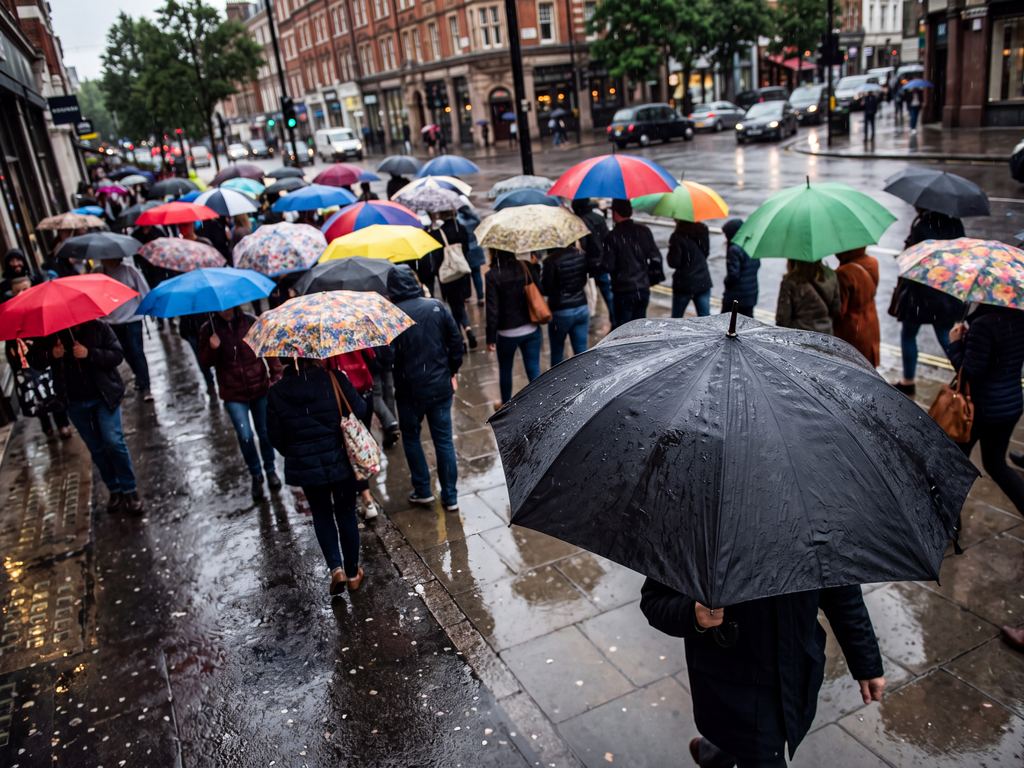
Rain gear is where the rules and the weather collide. New York requires long umbrellas to be checked. Bilbao asks for no umbrellas in the galleries. Venice has nothing to say on the page we read. Nobody states whether a small folding umbrella is acceptable, so assume it will be checked, and choose a hood over a handle where you can.
Our advice is a packable shell jacket for any spring or autumn visit, with an umbrella as an extra. In Bilbao and San Sebastián, where the Basque coast gets about 1,155 to 1,684 mm of rain a year, the jacket is not optional.
What belongs in your daypack? A short list
| Item | Why it matters | Rule or our advice |
|---|---|---|
| Phone with charge and data | New York's Digital Guide (free, in the Bloomberg Connects app) needs an app download. In Bilbao the audio guide opens from a QR code | Rule: museum offers them. Advice: install the app before you arrive |
| Headphones | The New York guide tells visitors to bring their own | Rule: museum asks you to bring headphones |
| Power bank | Navigation, tickets and audio drain batteries | Advice only: no museum mentions power banks, and we have not verified that they are accepted |
| ID | Student and senior prices need proof of age or status; thresholds and prices are on our tickets page | Rule: museums ask for ID where a discount applies |
| Printed or saved ticket | Security checks and the New York coat check both want the ticket | Advice: save a copy offline |
| Pencil and small notebook | Sketching with a pencil is allowed in New York and Venice | Rule: pencils yes; pens, markers and easels no |
| Refillable water bottle | New York allows personal water bottles; Bilbao and Venice are silent on bottles and ban drinking in galleries | Rule in New York; for the other two, leave it in the bag until you are outside |
| Compact rain layer | See the weather table above | Advice |
| Small reusable bag | Everything you carry has to fit the limits | Advice |
What should you leave at the hotel?
Anything that fails the rules above, plus a few items that are only a nuisance. From the rules: wheeled luggage and anything over the size limits, tripods, selfie sticks and camera poles, e-bikes and e-scooters (New York), outside food (New York allows water bottles), sharp objects and markers (Bilbao's tips ban sharp objects, pens and markers in the galleries). Our advice adds: valuables you do not need, a second camera lens, and any big umbrella you can swap for a hood.
We did not find a published luggage-storage service in any of the three museums, apart from the lockers and coat rooms inside. If you are checking out of a hotel the same morning, ask the hotel to hold your bags.
What are the photo and noise rules?
All three allow flash-off photography for personal, non-commercial use unless a sign in the gallery says otherwise. All three ban tripods. New York also bans camera extension poles; Bilbao and Venice ban selfie sticks. We found nothing about video in any of them, so we make no rule about it; ask a guard. In New York, pencils and notebooks are permitted for sketching, while pens, paint and easels are not. Venice says the same.
Noise is a matter of manners rather than a number. New York's rules forbid running, rowdy games and amplified sound; Bilbao lists no running, no touching the works and children supervised at all times. Our advice: put the phone on silent, use headphones with the audio guide, and keep conversations low in the galleries, since a spiral or an atrium carries sound.

What about Venice in November, or Bilbao in rain?
Water changes what you pack in two places. Venice: high water is most common from October to January, and the MOSE barrier has cut the number of floods in the historic center since 2020. Our advice is waterproof shoes or boots in November rather than rain trousers, plus a spare pair of socks. We found no high-water policy on the museum's visit pages. Bilbao: the wettest month is November at 171 mm, so waterproof shoes beat a bigger umbrella. Details and numbers are on the best time to visit page.
Do you need a document for a discount?
Yes, whenever the discount depends on who you are. New York asks students and seniors to show ID, Bilbao asks for ID at the desk for students and seniors, and Venice accepts a valid ID for the reduced tickets. Take your passport or a national ID plus, for students, a card that shows enrollment. The age limits and prices change and live on our tickets and discounts page. If you travel with children, note that New York words its free-entry age in two ways ("under 12" on some pages, "12 and under" on others), so confirm at the door for a 12-year-old. More on families and access is in our kids and accessibility guide.
Guggenheim Abu Dhabi: what can we say about bags?
Nothing, because nothing has been published. The museum is scheduled to open on 11 December 2026 and, as of 3 November, no visitor rules are public. The only thing we can state is climate: from May to September average highs reach 103 to 110 °F at Abu Dhabi airport, so we would not plan an outdoor walk then. Rules will appear on our Abu Dhabi page once the museum publishes them.
What to bring: common questions
Can I bring a backpack into the Guggenheim in New York?
Yes, but it must go to the free coat check. If you skip the coat check, the museum says to carry it in your hand or on your front. Anything over 22 x 14 x 9 inches is not allowed at all.
Is there a locker or coat check?
Yes in all three: a free coat check in New York, a coat room in Bilbao (the museum's page states no fee) and free lockers at the ticket office in Venice. We did not find size limits for the Venice lockers.
Can I take photos inside?
Yes, without flash and for personal use, unless a sign says otherwise. Tripods are banned everywhere, selfie sticks in Bilbao and Venice, and camera poles in New York.
Can I bring water?
In New York, personal water bottles are an explicit exception to the outside-food rule. Bilbao and Venice do not say; both ban eating and drinking in the galleries, and Venice bans it in the garden too.
Do I need an umbrella at the Guggenheim?
Bring a hood or a compact umbrella you are prepared to check. Long umbrellas must be checked in New York, and Bilbao does not want umbrellas in the galleries.
Is there a dress code?
Only in Venice, where shirtless, swimwear or barefoot visitors are refused. The other museums publish none. Bilbao suggests layers in summer.
Should I bring cash for the pay-what-you-wish hour in New York?
We found no source that mentions cash. The museum strongly recommends reserving a timed ticket, so check that page rather than relying on cash.
Can I bring a stroller?
Yes in all three. New York also lends a limited number, Bilbao lends strollers at the coat room, and Venice allows strollers.
Next: sort out your tickets
Prices, discounts and passes are checked and dated on one page.
Guided tours in New York
Third-party tours that include the museum.

Electric Pedicab NYC Tour With Flexible Stops, Times Square to Fifth Avenue
The driver is the guide and the route is open: riders add or skip stops between Times Square, Fifth Avenue, Rockefeller Center and the Empire State Building.
Guided Pedicab Tour of Celebrity Homes and Film Locations Around Central Park
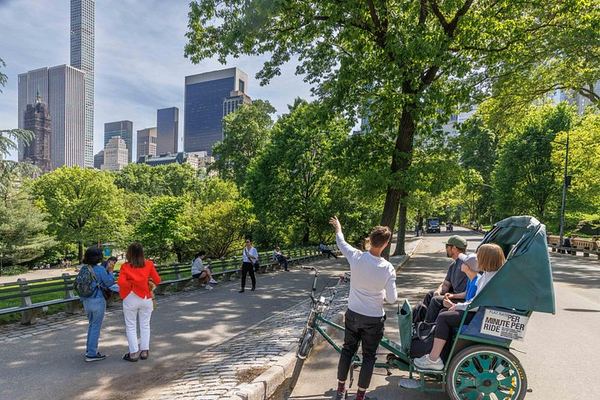
Guides point out who lived where around the park, from the Dakota to the Essex House, and which scenes were shot at the Boathouse, Bow Bridge and the Plaza.
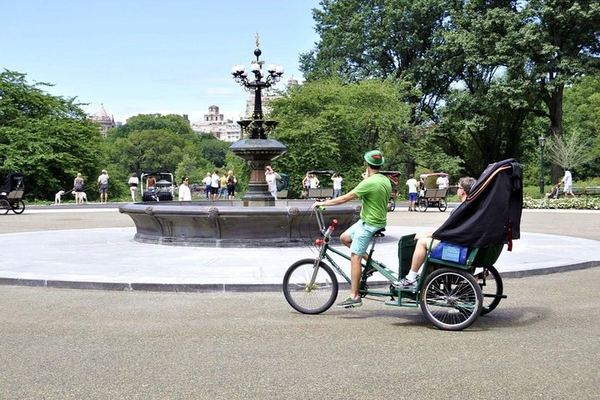
Private Central Park Pedicab Tour With Walking Stops, 1 to 3 Hours
A private pedicab ride through Central Park with 5-minute walking stops at Strawberry Fields, Bethesda Fountain and Bow Bridge, in 1, 2 or 3 hour versions.
Ratings collected by Viator and Tripadvisor
Data verified on . Rules read on the three museums' own visit pages on 3 November 2026. Climate figures: NOAA, WMO, ISPRA. This site is independent of the museums. Editorial Policy