
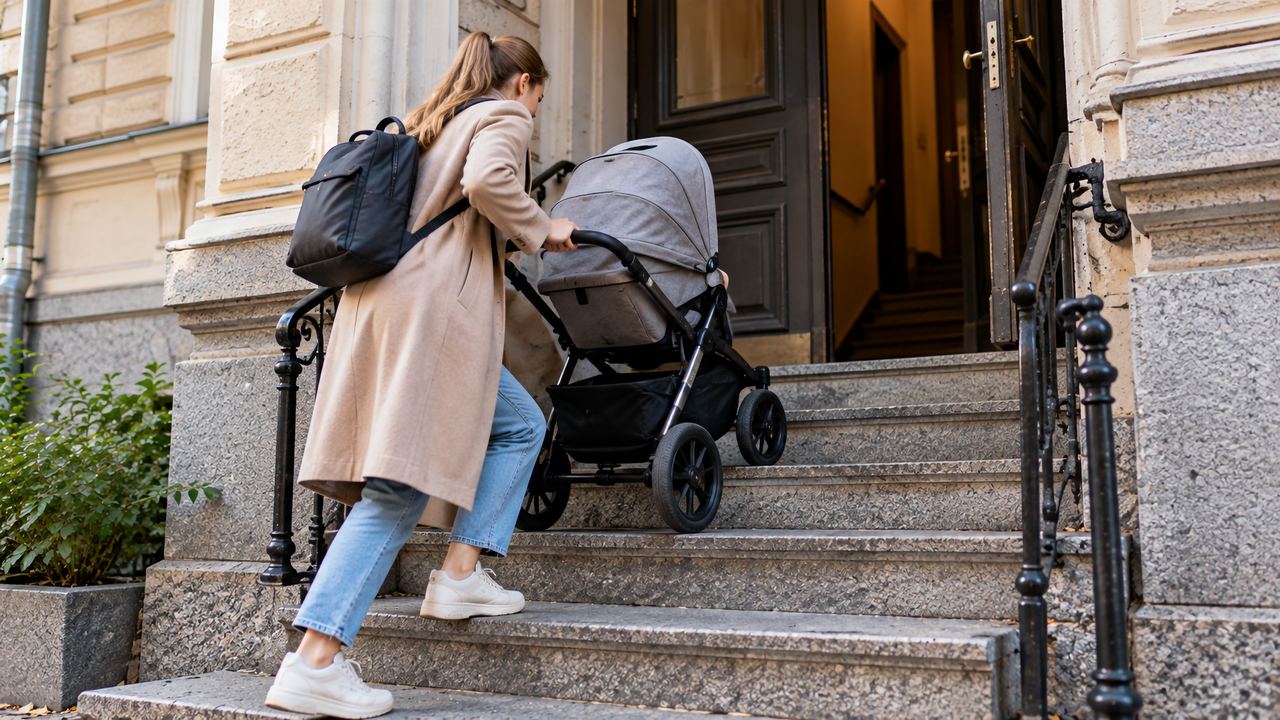
Yes, the Guggenheim museums work for families and for visitors who need step-free access, and the details differ a lot by city. New York reaches every level by elevator except one small gallery and admits strollers. Bilbao lends strollers, baby carriers and wheelchairs from the coatroom. Venice is entered from land only and uses four platform lifts to cross steps. Below are the rules we read on the museums' own pages on 3 November 2026, city by city. This site is independent and is not affiliated with the museums, so for anything you rely on (a lift, a program, a booking) confirm with the museum itself.
Two things to keep in mind. First, prices and age limits for free entry belong to our tickets and discounts guide, which dates them; this page does not repeat them. Second, the programs the museums run for children and for visitors with disabilities change by season. We describe what exists and how to ask, not a calendar.
The most useful accessibility fact is the least dramatic one: in all three cities you can ask at the entrance, and in Bilbao and Venice the equipment you might need is kept at the coatroom or the ticket desk.
New York: stroller rules, the elevators and the ramp
The rotunda is a spiral ramp that the museum describes as a quarter mile long with a three-degree incline. The incline is gentle, strollers and wheelchairs are admitted, and the museum also keeps elevators for those who prefer them: every level is reachable by elevator except the High Gallery, which sits at the top of the first ramp and has two low steps at its entrance. Part of it can be seen from levels 1 and 2 of the rotunda. The museum also publishes a PDF listing the works on view there, so you can check whether you are missing anything.
| Topic | What the museum says | Our note |
|---|---|---|
| Strollers | Strollers and soft front carriers are allowed. Toddler carriers, baby backpacks and carrying a child on your shoulders are not. A limited number of strollers can be borrowed at the coat check. | Bring your own if you can; the loan pool is limited by the museum's own wording. |
| Nursing and baby care | You may nurse or bottle-feed anywhere in the museum. Accessible restrooms and changing tables are on levels 1 and 7. Single-stall all-gender restrooms are on each floor of the rotunda. | Plan your changes around levels 1 and 7. |
| Elevators and seating | Elevators reach every level except the High Gallery. Benches are throughout the museum. | Useful with tired children. |
| Wheelchairs | Manual wheelchairs are free with no reservation: ask security at the entrance. Motorized chairs are allowed. | Say so on arrival; do not plan on reserving. |
| Service animals | Service animals are welcome. | Ask the museum about other animals. |
| Blind and low-vision visitors | Mind's Eye offers monthly tours and workshops, free with an RSVP; audio descriptions exist; lights may be dimmed during some programs. | The museum gives two different RSVP deadlines (see below). |
| Deaf and hard-of-hearing visitors | ASL interpretation for tours and public programs on request with two weeks' notice. Short videos in ASL, with open captions, cover selected works. Assistive listening devices are available on request for public tours and for the Peter B. Lewis Theater. | Request early; two weeks is the stated minimum. |
| Neurodivergent visitors | A social narrative and a sensory map point out quieter spaces. Guggenheim for All is the program. | Download both before you go. |
| Food and drink | Outside food and drink are not allowed, except personal water bottles. Café Rebay serves pastries, sandwiches and drinks, with a view over Central Park. | Pack water, not snacks. |
| Wi-Fi and guides | Free Wi-Fi (Guggenheim Guest). The Digital Guide is free in the Bloomberg Connects app; bring headphones. | Download the app on home Wi-Fi. |

What does New York offer for children?
The family offer is a set of programs rather than a single tour. Among those we saw on the museum's family pages: the Art Cart, a Saturday activity cart in time slots (free with admission); a monthly Stroller Hour on a Saturday morning for parents with babies; downloadable art kits; audio and activities designed for kids; holiday camps; and programs for teenagers. The museum also lists kids' audio and activity guides with admission. Times and prices change, so open the museum's family-programs page for the current list. For free entry, note that the museum words the age limit two ways: its discounts page says "under 12" and its family-programs page says "12 and under". If your child is 12, ask at the ticket desk.
Ideas for making the ramp work with children
These are our suggestions, not museum rules, and they stay inside the rules above. The museum does not allow running or rough play, nor toddler carriers, baby backpacks or shoulder-riding. Within those limits:
- Turn the spiral into a game. Let your child choose one work per level, and ask them to say why. The ramp does the pacing for you.
- Use the benches. A child who sits for five minutes in front of one work often looks harder than one marched past ten.
- Plan the visit around the youngest child's energy, not the building's length. The museum does not suggest a visit length, so leave when it is time to leave.
- For babies, a soft front carrier or the borrowed stroller keeps your hands free for the parapet. The museum's Visitor Guide asks you not to hold phones, cameras or objects over the ramp rail.
- Bring a pencil and a small notebook. The museum allows pencils and notebooks for sketching; it does not allow pens, paints or easels.
Bilbao: lent equipment, two entrances and a family program for babies
Bilbao's museum is built around an atrium with three levels of galleries joined by walkways, glass elevators and stairs. There are two accessible entrances: the main entrance, through the bar, with an elevator, and the riverside entrance, with a ramp. The museum says you can borrow strollers or baby carriers, wheelchairs and ultralight folding chairs by asking at the coatroom.
| Topic | What the museum says | Our note |
|---|---|---|
| Families | A families section offers tools and programs for children from six months upward, such as workshops, activities for babies, drawing courses and family yoga. The calendar changes. | Look at the activity calendar for your dates; we cite only that it exists. |
| Strollers and chairs | Strollers or baby carriers, wheelchairs and folding chairs can be borrowed at the coatroom. | Ask on arrival. |
| Elevators | Glass elevators, walkways and stairs join the three levels. Two accessible entrances: the main one, through the bar, and the riverside entrance with a ramp. | Both entrances are listed as accessible; ask staff which is nearer your route. |
| Restrooms | Every restroom block has an accessible stall; changing tables are on floors 1 and 0. | Floors 1 and 0 of the building. |
| Service animals | Animals are not admitted except guide dogs and prescribed service animals. | The museum uses the phrase "guide dogs and prescription pets". |
| Blind and low-vision visitors | Tactile models of the building and of sculptures, and a sensory guide called Mind's Eye. | See the discrepancy section below. |
| Deaf and hard-of-hearing visitors | Video guides in Spanish Sign Language or with subtitles; magnetic loops at the auditorium and information desks. | Other sign languages are not mentioned. |
| Audio guide | Included in every ticket and opened with a QR code on your phone. The museum says you scan the code once you are inside. We did not find the list of languages. | Bring a charged phone and headphones. |
| Bags and food | Belongings must fit under 35 by 35 centimeters; the coatroom page states no fee. Eating and drinking are not allowed in the galleries, but children may eat in corridors and on benches outside the rooms. | A useful rule for a family with snacks. |
| Conduct and climate | Do not touch the works; no running; keep children supervised. In summer the museum advises layers because the interior is rather cool. | Bring a sweater, even in July. |
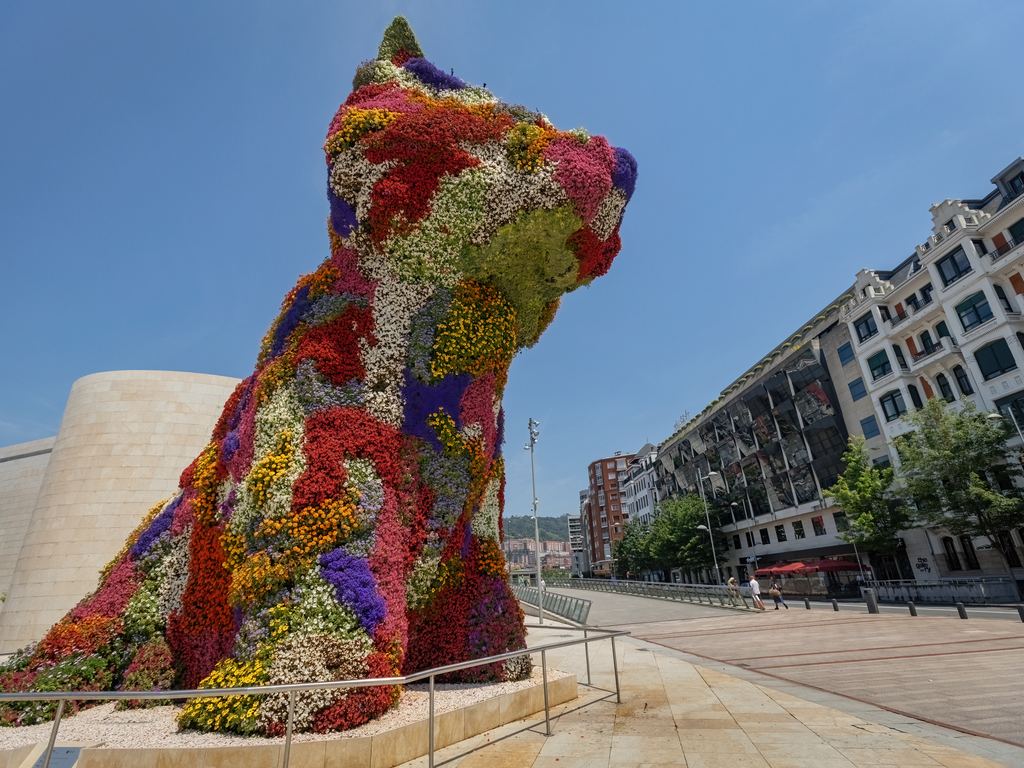
Bilbao is the easiest of the three for small children for a simple reason: the grounds are part of the visit. The giant dog Puppy and the spider-like Maman sit outside, which gives a family something to do before or after the galleries, and the rule about eating in the corridors gives a break for snacks. Our itineraries page places those outdoor stops at the end of the visit.
Venice: step-free access by platform lift, and a booklet for children
The Peggy Guggenheim Collection is in a historic palazzo and garden, and the museum tells visitors that access is from land only, not from the Grand Canal. Vaporetto stops the museum names nearby are Accademia, Salute and Zattere. Inside, four platform lifts overcome the steps, and each is described by its number of steps.
| Lift | Steps it crosses | What it reaches |
|---|---|---|
| Garden | 7 steps | The garden |
| Palace entrance | 8 steps | The permanent collection inside the palazzo |
| Museum Bistrot | 4 steps | The cafe (open only to ticket holders) |
| Temporary exhibition galleries | 9 steps, except the last two | The temporary galleries; the last two steps are not covered |
| Topic | What the museum says | Our note |
|---|---|---|
| Children's activities | <i>The Key to Peggy Guggenheim's Home</i>: a free activity booklet at the ticket desk, in English and Italian, with stickers and a postcard to leave for Peggy. Some family workshops are for members only. | The booklet is the part you can count on. |
| Strollers and carriers | Strollers are allowed and available at the entrance. Baby-carrier backpacks must be left in the coatroom, as must all backpacks. | Take a stroller or a front carrier. |
| Restrooms | Two restrooms with changing tables are declared. | Other restrooms are not described. |
| Wheelchairs | Free wheelchairs at the ticket desk. Admission is free for visitors with reduced mobility and a companion. | Ask when you buy the ticket. |
| Service animals | Service animals and certified therapy animals are welcome; pets are not. | A dog-sitting service is mentioned, but the page text is cut off. |
| Blind and low-vision visitors | <i>Double Meaning: a Tactile Journey</i>: tactile reproductions in the rooms, downloadable descriptions, and a free tactile visit on request by email to [email protected]. Admission is free for blind and low-vision visitors and a companion. | Write ahead to arrange the tactile visit. |
| Deaf and hard-of-hearing visitors | We found no information on sign-language or hearing services on the accessibility page. | Ask the museum. |
| Lockers and food | No large items such as bags, backpacks or suitcases; free lockers at the ticket desk. No food or drink inside, even in the garden. | The garden is not a picnic place. |
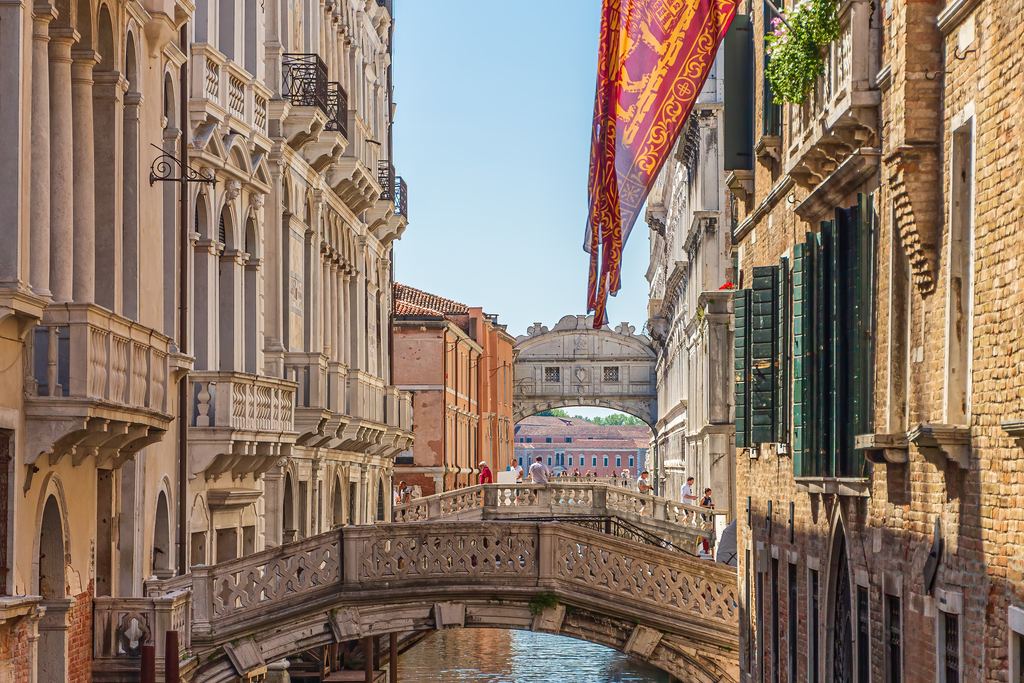
The Venice museum is the only one where the way to the front door matters as much as the museum. The city's bridges have steps, and a vaporetto stop is not the same as a step-free route. The museum does not publish walking times, and we have not tested the route from each stop, so plan the approach with the museum or a city accessibility resource and use the getting-there guide for the transport basics. In 2027, on the 72 days the municipality has listed, day visitors to the city may also owe an access fee; the amount had not been announced at our check.
Where do the museums disagree with themselves?
A short list of places where we found two answers on the museums' own sites. We report both and do not pick a side.
- New York, free entry for children: "under 12" on the discounts page, "12 and under" on the family-programs page.
- New York, Mind's Eye reservations: the accessibility page says to RSVP at least one week ahead, while the Mind's Eye page says three days.
- Bilbao, tactile models: the accessibility page lists the sculpture Tulips among the models, while the collection page says the work is not currently on view.
- Bilbao, audio guide: the accessibility text speaks of an app that "will be available", while the ticket page says the audio guide is already included.
- Venice, children's days: a page says family workshops are on Sundays, while the calendar lists Saturday workshops that require registration or membership. Do not count on a workshop without checking.
Which museum suits which family?
| Need | New York | Bilbao | Venice |
|---|---|---|---|
| Stroller | Allowed; some on loan | On loan, plus baby carriers | Allowed; at the entrance |
| Step-free access | Elevator everywhere except the High Gallery | Two accessible entrances and glass elevators | Platform lifts at four points; entrance from land |
| Free wheelchair | Yes, no booking | On loan at the coatroom | Yes, at the ticket desk |
| Children's offer | Programs, Art Cart, kids' audio | Families section from six months | Free activity booklet |
| Snacks | Outside food not allowed | Corridors and benches outside rooms | Not even in the garden |
| Sign-language services | ASL on request, ASL videos | Spanish Sign Language videos | None found |
Before you go
Pack for the rules, not the weather alone
Bag, food and stroller rules differ by city. Our what-to-bring list sets them side by side so you can pack once.
Families and accessibility questions
Can I take a stroller into the Guggenheim?
Yes in all three. New York admits strollers and soft front carriers; Bilbao lends strollers and baby carriers; Venice has strollers at the entrance. Toddler carriers and baby backpacks are not accepted in New York, and Venice makes you check baby backpacks.
Is the Guggenheim New York wheelchair accessible?
Every level is reached by elevator except the High Gallery. Manual wheelchairs are free without a reservation. Ask security at the entrance.
Is the Peggy Guggenheim Collection accessible?
It is accessible with platform lifts at four points, each crossing between 4 and 9 steps. The entrance is from land only. Free wheelchairs are at the ticket desk.
Are guide dogs allowed?
New York welcomes service animals. Bilbao admits guide dogs and prescribed service animals only. Venice welcomes service animals and certified therapy animals but not pets.
Do the museums have programs for blind visitors?
New York has Mind's Eye, Bilbao has tactile models and a sensory guide, and Venice has Double Meaning. Reserve ahead for the guided ones.
Do kids get in free?
The age limit differs by city; see our tickets guide. In New York, ask at the desk if your child is exactly 12.
Can I bring snacks for children?
In New York only personal water bottles, not outside food. In Bilbao, children may eat in corridors and on benches outside the galleries. In Venice no food or drink at all inside, garden included.
Where can I change a baby?
New York has changing tables on levels 1 and 7, Bilbao on floors 1 and 0, and Venice has two restrooms with changing tables.
Planning the day around your family?
Ready-made days with the stops in order are on our itineraries page.
Data verified on . Accessibility, family and visiting-rule pages of the three museums, read 3 November 2026. Rules change; the museums' pages decide. Editorial Policy