
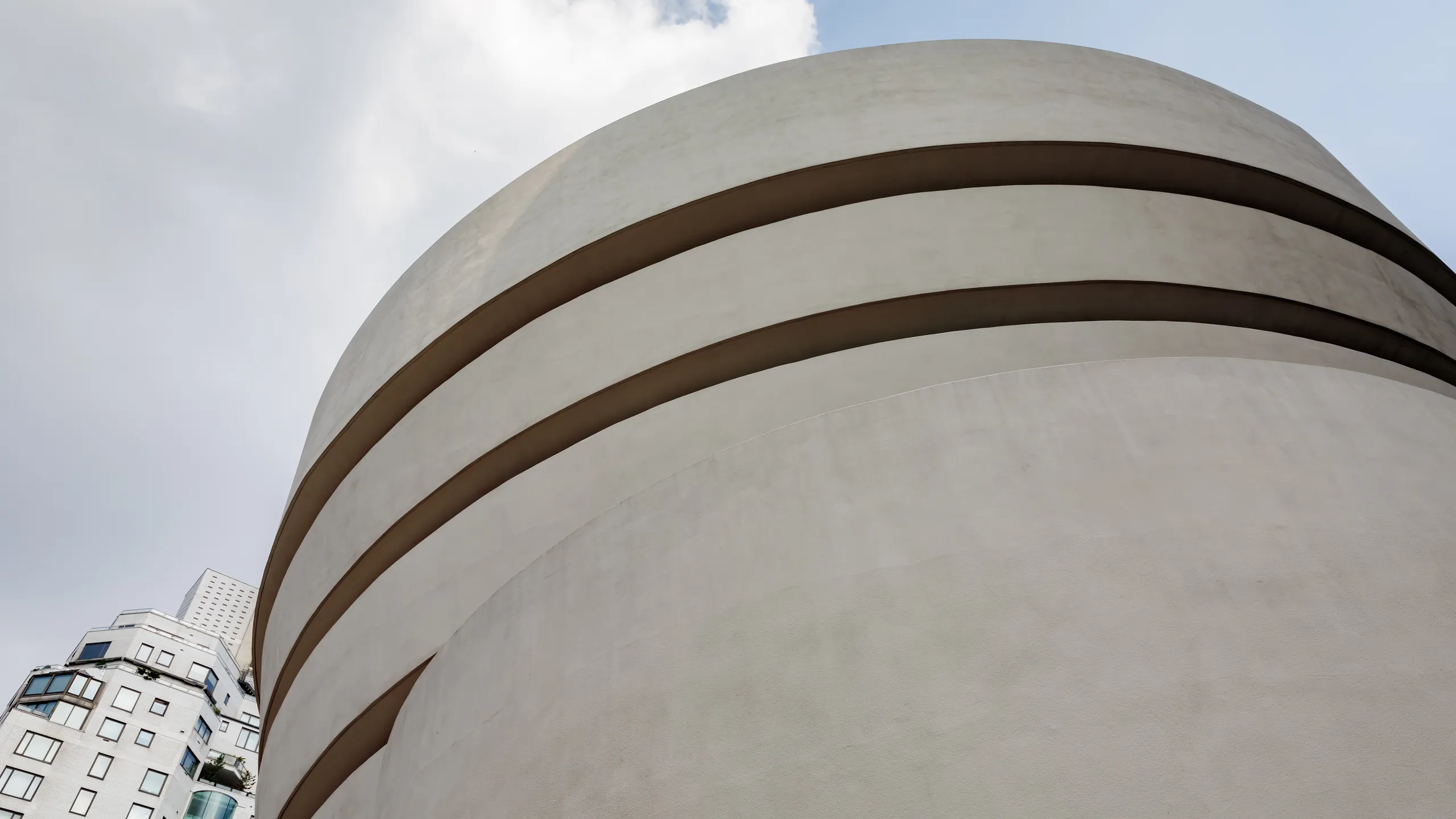
The Guggenheim is not one museum but a network: three museums are open today, in New York, Bilbao and Venice, and a fourth, in Abu Dhabi, has an announced opening date of 11 December 2026. Each sits in a different building by a different architect, and the Solomon R. Guggenheim Foundation, chartered in 1937, is the thread that links them. This page maps the network and points to our culture pages, from Wright's spiral to the branches that closed. guggenheim.museum is independent and not affiliated with the museums or the Foundation; everything here was checked on 3 November 2026.
How do you read the Guggenheim network?
Think of it as four museums, four buildings, one Foundation. The Foundation's own history page describes an “international constellation” of New York, the Peggy Guggenheim Collection in Venice, Bilbao and the future Abu Dhabi. It does not list Berlin, SoHo or Las Vegas, which are closed. What the sites share is a name and a body of ideas about modern and contemporary art. What they do not share is a ticket, an opening calendar or a set of house rules, so every practical answer has to be read for the museum in question.
The governance also differs. New York is the Foundation's flagship. Venice opened as a Foundation museum in 1980, after Peggy Guggenheim's death in 1979. Bilbao is governed by its own Basque foundation, described by the museum as an extraordinary partnership between Basque institutions and the Solomon R. Guggenheim Foundation. Abu Dhabi is a partnership with the emirate's Department of Culture and Tourism.
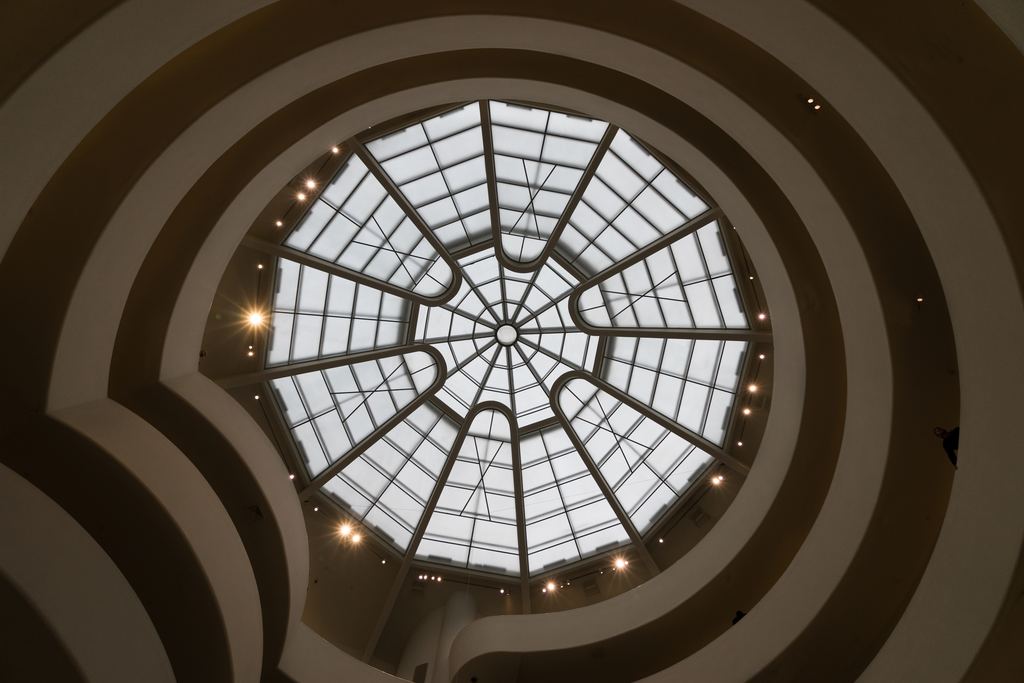
Four buildings, four ways of showing art
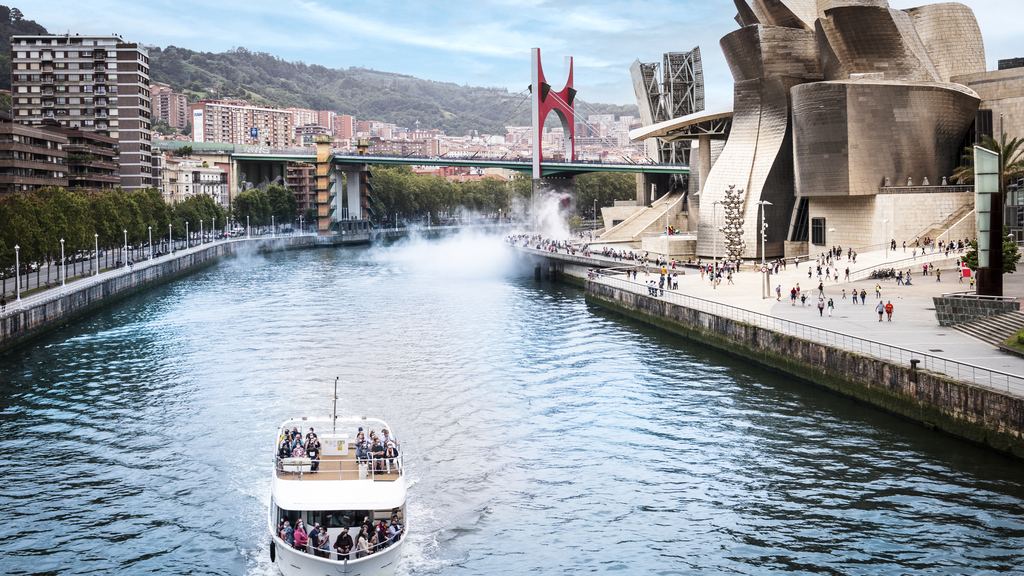
In New York, Frank Lloyd Wright's rotunda opened on 21 October 1959, six months after he died, and became one of eight Wright buildings on UNESCO's World Heritage list in 2019. In Bilbao, Frank Gehry's titanium, limestone and glass building opened in October 1997. In Venice, an unfinished 18th-century palazzo on the Grand Canal became Peggy Guggenheim's home in July 1949. Abu Dhabi is Gehry's second Guggenheim, and he did not live to see it open.
Where do the museum, city and tour pages fit?
This site has two layers. The venue pages hold the practical facts for each museum (hours, prices, tours), organized in nine categories. The culture pages in this section hold what does not change much: architecture, collections, movements and history. Read a venue page when you are booking and a culture page when you want to know what you are looking at.
- Spain, the country page for Bilbao and the Basque Country.
- Guggenheim Museum Bilbao, the museum page: hours, prices, how to get in.
- Bilbao guided tours with admission, where the tours that include a ticket are listed.
- Bilbao city and architecture tours, for the city around the museum.
- Basque Country day trips, for excursions beyond the city.
- United States, the country page for New York.
- Guggenheim Museum New York, the museum page and its tours.
- Italy, the country page for Venice.
- Peggy Guggenheim Collection, Venice, the museum page and its tours.
Tours are not a separate category: they sit inside the museum and Bilbao pages above, and What Guggenheim tours actually include explains how to read a tour listing before you choose one.
The culture pages, in the order we would read them
Start with the building that interests you, then widen out.
Frank Lloyd Wright's Spiral
The 1943-1959 story of the New York building and how to look at the rotunda.
Gehry's Bilbao and the Bilbao Effect, Checked
How the titanium building was made, and what the evidence says about its city-wide effect.
Ten Works to Find in the Peggy Guggenheim Collection
Ten verified works in Venice, where to find them and how to look.
What Hangs Where
The collections of New York, Venice and Bilbao compared, and why they do not repeat.
Art Movements at the Guggenheim
A primer on the movements you will meet, tied to works actually in the collections.
Myths and Curiosities, Fact-Checked
Stories about the Guggenheims that do not hold up, with the source that settles each.
Glossary: 80 Terms
The architecture and art vocabulary you will see on museum labels.
Guggenheim Abu Dhabi: What We Know
What is announced, what is confirmed and what is still unpublished.
The Guggenheim Branches That Closed
SoHo, Berlin, Las Vegas, the Hermitage and Helsinki: what happened to each.
What Guggenheim Tours Actually Include
A plain-language dossier on the tour formats we list.
How did the network grow? A timeline of firm dates
Only dates we could source from the Foundation, the museums or public records are shown. Where sources disagree on a closing year, the entry says so.
The origins
-
1937
The Foundation is founded
The Solomon R. Guggenheim Foundation is established, with education as a founding mandate.
-
1939
First museum opens in Manhattan
The Museum of Non-Objective Painting opens under Hilla Rebay.
-
1943
Wright is commissioned
Frank Lloyd Wright is asked to design a new building. It will take sixteen years to open.
The growth
-
21 October 1959
The spiral opens on Fifth Avenue
Wright's building opens to the public, six months after his death.
-
1980
Venice joins as a Foundation museum
Peggy Guggenheim's palazzo and collection open under the Foundation after her death in 1979.
-
June 1992
SoHo opens
The Guggenheim Museum SoHo opens at 575 Broadway; it closed in the early 2000s (sources differ on the year).
-
October 1997
Bilbao opens
Gehry's museum opens, built and run in partnership with Basque institutions.
-
8 July 2006
Abu Dhabi agreement announced
The emirate and the Foundation announce a Guggenheim museum on Saadiyat Island.
-
February 2013
Berlin closes
The Deutsche Guggenheim, open since November 1997, closes after fifteen years of partnership with Deutsche Bank.
-
30 November 2016
Helsinki is rejected
The city council votes 53 to 32 against a Guggenheim, after the city board narrowly rejected the idea in 2012.
Today
-
11 December 2026
Abu Dhabi is due to open
The Department of Culture and Tourism announced this date. As of 3 November 2026 the museum is not yet open.
How many people visit each Guggenheim?
| Museum | Visitors in 2025 | Where the figure comes from | Caution |
|---|---|---|---|
| Guggenheim Bilbao | 1,305,003 | The museum's release of 2 January 2026 | The 1,260,894 figure in some articles was a count to mid-December 2025 |
| Guggenheim New York | 774,057 | The Art Newspaper, 2026 survey | About 40 percent below 2019 in that ranking; we found no museum release |
| Peggy Guggenheim Collection | Over 343,000 | The museum's release of 8 January 2026 | Counted as entries over 313 opening days |
Do not rank these three as if they were one series. Bilbao's number is a museum count, New York's is a trade-press ranking, Venice's is entries over 313 days, and no source we read says the three count a visitor the same way. What the figures do show is the shape: Bilbao has hovered around 1.3 million visitors in each of the last three years, New York sits about 40 percent below its 2019 level in the same ranking, and Venice is the smallest of the three.
Use these numbers for scale, not for a league table: the three museums count visitors in different ways.
Why did the Guggenheim grow so fast, and why did some branches close?

Satellites, partners and limits
From 1988 to 2008, director Thomas Krens pushed a global strategy: new museums financed in large part by host governments, which gained prestige and tourists. Bilbao was the success the model leaned on. SoHo, Berlin, Las Vegas and the Hermitage venue did not last, and Helsinki was rejected twice. Critics coined “McGuggenheim” for the franchise model; the oldest use we could find dates from 2001, and we found no one who coined it. The full story of each closure is in The Guggenheim branches that closed.
Frequently asked questions about the Guggenheim network
How many Guggenheim museums are there?
Three are open: the Solomon R. Guggenheim Museum in New York, the Guggenheim Museum Bilbao and the Peggy Guggenheim Collection in Venice. Abu Dhabi has an announced opening of 11 December 2026. Earlier branches in SoHo, Berlin and Las Vegas have closed. The practical answer for travelers is in our Guggenheim FAQ, and the closures are in The Guggenheim branches that closed.
Which Guggenheim is the oldest?
It depends on what you count. The Foundation dates from 1937 and its first museum opened in 1939. The New York building opened in 1959. Venice's palazzo was commissioned in 1749, Peggy Guggenheim bought it in July 1949, and it became a Foundation museum in 1980. Bilbao opened in 1997. Our guide to the Wright spiral covers the oldest purpose-built museum.
Are all the Guggenheim museums run by the same organization?
No. New York and Venice are run by the Solomon R. Guggenheim Foundation. Bilbao is governed by a Basque foundation that the museum describes as a partnership between Basque institutions and the Foundation. Abu Dhabi is a partnership with the emirate's Department of Culture and Tourism. That is why tickets, hours and rules differ from one museum to the next.
Do the Guggenheim museums share collections?
Only partly. They belong to one Foundation, but each shows a distinct core. New York leans on its founding collection and the Thannhauser gift, Venice on Peggy Guggenheim's own collection, and Bilbao on large contemporary installations and sculpture. Peggy Guggenheim's collection has been kept separate from New York's, though the museums have mounted joint exhibitions. We compare them in What hangs where.
Is guggenheim.museum the museums' own website?
No. This is an independent site, not affiliated with the museums or the Foundation. We write guides and list tours from third-party providers, and we may earn a commission when you book through them. For hours and rules, use each museum's own website, and see our editorial policy for how we check facts.
Where should I start reading on this site?
If you are planning a trip, start with Plan your Guggenheim trip. If you are curious about the buildings and the art, start with Wright's spiral or Gehry's Bilbao. If you have a quick practical question, the FAQ has fifty answers.
Ready to plan a visit?
Eight decisions in order, from which museum to what to bring.
Data verified on . Dates from the Foundation and museums' pages and public records; visitor figures from the sources named. See our editorial policy. Editorial Policy