
The ten works worth finding at the Peggy Guggenheim Collection in Venice are Magritte's Empire of Light, Brancusi's Maiastra, Max Ernst's Attirement of the Bride, de Chirico's The Red Tower, Picasso's The Studio and On the Beach, Severini's Sea=Dancer, Pollock's Alchemy, Calder's Silver Bedhead and Marino Marini's The Angel of the City. On 3 November 2026 the museum's own website marked every one of them "On view." That is the only claim about location we can make: the museum's object pages do not say which room a work hangs in, so neither do we.
This site is independent and not affiliated with the museum or the Solomon R. Guggenheim Foundation. We read the museum's page for each work, wrote down what it says, and added the Calder Foundation's records where they help. Where sources disagree, the section says so.
Check the status before you set your heart on a work. "On view" was true on 3 November 2026. Works rotate and go out on loan, and the museum's object page is the place to look on the morning you visit.
How we chose the ten, and how to read a museum label
The list is not a ranking. It is built so that one visit crosses the collection's main currents: Futurism, Metaphysical painting, Cubism, Surrealism, Abstract Expressionism and the sculpture Peggy lived with. Each work also comes with something the museum itself says about it that you can test with your own eyes, which is more useful in front of a painting than a date and a title.
Every object page carries an accession number, such as 76.2553 PG 150 for Pollock's Alchemy. The prefix is the same on all ten pages, and it lines up with 1976, the year the museum says Peggy gave her collection to the Foundation. The credit line reads "Peggy Guggenheim Collection, Venice (Solomon R. Guggenheim Foundation, New York)." So these works hang in Venice but belong to the New York-based Foundation; they are not loans from somewhere else, and they are not Peggy's private property any longer.
Ten works, in the order they were made
The order below follows the dates, so you can read it as a short history of art from 1912 to the mid-1950s. Sizes and materials come from the museum's object pages, checked on 3 November 2026.
Brancusi, Maiastra (about 1912)
Start with the smallest object on the list. Maiastra stands 76 cm high on a limestone base, and the museum describes it as polished brass, so that is what we call it. The title is Romanian: the măiastră is a magical, brilliantly plumed bird from folk tales, and the museum notes the word itself means "master" or "chief." Brancusi went on to make about thirty bird sculptures, which makes this one a step in a long argument he was having with himself.
Walk around it and watch the polished surface. The museum reads the gold of the plumage in the shine of the metal, and the bird's song in the puffed chest, the arched neck and the open beak. Then find the saw-tooth base: it lifts the bird so that it seems to perch. If you also come across Bird in Space (1932-40), which the museum marked on view the same day, compare the two. Peggy bought that one as the Germans approached Paris, and it shows what twenty years of simplifying does to the same animal.
De Chirico, The Red Tower (1913)
The Red Tower is 73.5 by 100.5 cm and mostly empty space, which is the point. The museum lists the ingredients of its unease: irrational perspective, no single source of light, elongated shadows and a hallucinatory focus on objects. Look at the shadows first. Try to work out where the light is supposed to be coming from, and notice that the painting will not tell you.
The detail to hunt for is a partly hidden equestrian monument, which the museum says is often identified as the statue of King Carlo Alberto in Turin. A horse and rider in a square built for nobody. In 1919 de Chirico wrote that every object has a current appearance and another, "spectral or metaphysical," that only some people glimpse in moments of clairvoyance. The museum calls his work of 1911-17 a crucial inspiration for the Surrealists, and Peggy collected the Surrealists.
Severini, Sea=Dancer (January 1914)
This is the Futurist picture many visitors walk past. The museum dates it to January 1914 and gives the Italian title as Mare=Ballerina. Severini went to the coastal town of Anzio in 1913 to convalesce, and the painting came out of that stay. The dancer and the sea are fused: the museum likens her costume to breaking waves.
Step close. The short strokes of pure color come from Neo-Impressionism, which was still fashionable when Severini settled in Paris in 1906. Then look at the edge. The museum lists the work as oil on canvas, in the artist's painted frame (105.3 by 85.9 cm) and says the waves "lick the edge of the picture frame, bursting into the viewer's space." The frame is part of the painting, so give it the same attention. One more detail from the museum's biography of Severini: he was less drawn to machines than his fellow Futurists and kept choosing dancers to carry the movement.
Picasso, The Studio (1928)
The Studio (L'Atelier, oil and wax crayon, 161.6 by 129.9 cm) is flattened almost completely into two dimensions. The museum's text names the only things that break the flatness: the tall picture in a yellow frame that overlaps the red table, and two apples. Red and green are opposites on the color wheel, so they vibrate and refuse to sit on the same plane. Stare at the apples for a few seconds and you can watch it happen.
The second thing to check is the "woman." She has no limbs and no breasts, yet black lines and those same apples supply them, and the museum reads the painting on the easel as also being the nude model in the studio. Picasso gives you two readings at once and lets you decide. A useful test: notice which parts of the figure you filled in yourself.
Picasso, On the Beach (1937)
In the museum's words, On the Beach (La Baignade, 129.1 by 194 cm) is "unquestionably one of the icons" of the collection. It was probably painted in February 1937 at Tremblay-sur-Mauldre, and Peggy bought it in New York from Mary Callery in 1947. She hung it in the entrance hall of the palazzo. The object page puts 12 February 1937 in its heading and "probably" in its text, so treat the day as approximate.
The space is three flat bands: beach, sea, sky. Against them, two bathers play with a toy boat, heavy and almost sculptural. Now find the figure looming over the horizon. The museum reads it as a voyeur and ties the scene to two old stories about being watched while bathing, Diana and Susanna and the Elders. The composition looks calm; the tension is in what the calm is hiding.
Max Ernst, Attirement of the Bride (1940)
Attirement of the Bride (La Toilette de la mariée, oil on canvas, 130.1 by 96.5 cm) is, in the museum's description, veristic Surrealism: a traditional, polished technique aimed at an unsettling subject. The pageantry of the central scene is set against garish colors, animal and monster forms and the blunt symbolism of a poised spearhead.
Look at the upper left, where a picture sits inside the picture and the same bride strides through overgrown classical ruins. That inset uses decalcomania, invented in 1935 by Oscar Domínguez: diluted paint is pressed onto the surface with something like a pane of glass, so it spreads unevenly. Compare the smooth main scene with the mottled inset and you are looking at two techniques in one frame. The bird-man at left is the second thing to check. Ernst had identified with birds for years and had invented an alter ego, Loplop, Superior of the Birds, in 1929. The museum suggests the bird-man may depict the artist and that the bride may, in some sense, stand for the young English Surrealist Leonora Carrington. Ernst left France with Peggy in July 1941; Wikipedia dates their wedding to December of that year.
Calder, Silver Bedhead (1943, with a caveat)
This is the one most likely to be mistaken for decoration. Silver Bedhead measures 160 by 131 cm; the museum lists the material as silver and the Calder Foundation as silver wire. Read it as a drawing in wire rather than a slab of metal. The Calder Foundation also keeps a photograph of Peggy with the piece, dated around 1952.
Here is the caveat. The museum and the Calder Foundation both date it to 1943. Secondary sources collected in our research place it in the winter of 1945-46, in New York; we could not check those. We use 1943 because the two bodies that hold and document the work agree on it. The popular story that Calder made it for her Venetian bed does not fit either date: Peggy bought the palazzo in July 1949.
A smaller Calder is worth a glance if you see it: Earrings for Peggy Guggenheim (about 1938), also marked on view that day. At the opening of her New York gallery, Art of This Century, in October 1942, Peggy wore one Tanguy earring and one by Calder "in order to show my impartiality between Surrealist and Abstract Art," as the museum quotes her.
Pollock, Alchemy (1947)
Alchemy (114.6 by 221.3 cm) is one of Pollock's earliest poured paintings, and the museum's materials list is unusually long: oil, aluminum and alkyd enamel paint with sand, pebbles, fibers and broken wooden sticks on commercially printed fabric. View it from a distance first. The museum says its large scale and even emphasis make you experience it as an environment rather than a picture of something.
Then go close and find the white lines squeezed straight from the tube; the museum calls them primitive signs. Follow one line and watch it change speed: where it thins it quickens, where it thickens it slows. The fact most people miss is the title. Pollock did not choose it. The museum says Ralph Manheim and his wife, neighbors of the Pollocks in East Hampton, gave the painting its name, so every reading that leans on alchemy rests on a neighbor's idea. Alchemy is on view; the big 1943 commission Peggy gave him, Mural, is not in Venice (see below).
Marino Marini, The Angel of the City (1948, cast 1949)
This bronze (L'angelo della città, 175 by 176 by 106 cm) is a horse and rider with the rider's arms thrown wide. The museum gives you a way to date the mood. Marini's horse-and-rider theme first appears in 1936, slender and calm. A year later the horse rears and the rider gestures. By 1940 the forms are simpler, more archaic and squatter. By the late 1940s the horse is planted immobile, neck extended and strained, ears pinned back, mouth open, which is the stage this cast shows.
So look at the horse's stillness rather than at the rider. The museum ties the pose to "affirmation and charged strength associated explicitly with sexual potency," which explains why the figure reads less like a monument than a provocation. Marini's Pomona (1945) was marked on view the same day, so the two are worth comparing if both are out.
Magritte, Empire of Light (1953-54)
The French title is L'Empire des lumières, in the plural, and the painting (195.4 by 131.2 cm) shows a dark, nocturnal street under a pale-blue sky full of fluffy cumulus clouds. The only fantastic element is the combination of day and night. The museum says sunlight, normally the source of clarity, here causes confusion and unease, and that the luminous sky makes the empty darkness below even more impenetrable.
The thing to know before you walk up: this is one of several versions. The museum itself names others at the Museum of Modern Art in New York, the Menil Collection in Houston and the Royal Museums of Fine Arts of Belgium in Brussels. So you are not seeing the picture, you are seeing one of them. Look for what the museum calls an impersonal, precise style, preferred by Magritte since the mid-1920s: there is almost no gesture to find, and noticing its absence is half of the experience. Voice of Space (1931), another Magritte, was on view the same day.
Ten works at a glance
| Work | Artist | Date | Material (museum) | Size (cm) | Status |
|---|---|---|---|---|---|
| Maiastra | Constantin Brancusi | about 1912 | Polished brass on limestone base | 76 high (overall) | On view |
| The Red Tower | Giorgio de Chirico | 1913 | Oil on canvas | 73.5 x 100.5 | On view |
| Sea=Dancer | Gino Severini | January 1914 | Oil on canvas, painted frame | 105.3 x 85.9 | On view |
| The Studio | Pablo Picasso | 1928 | Oil and wax crayon on canvas | 161.6 x 129.9 | On view |
| On the Beach | Pablo Picasso | 1937 | Oil, conté crayon, chalk on canvas | 129.1 x 194 | On view |
| Attirement of the Bride | Max Ernst | 1940 | Oil on canvas | 130.1 x 96.5 | On view |
| Silver Bedhead | Alexander Calder | 1943 (dating discussed) | Silver | 160 x 131 | On view |
| Alchemy | Jackson Pollock | 1947 | Oil, aluminum, alkyd enamel, sand, pebbles, fibers, wood on fabric | 114.6 x 221.3 | On view |
| The Angel of the City | Marino Marini | 1948 (cast 1949) | Bronze | 175 x 176 x 106 | On view |
| Empire of Light | René Magritte | 1953-54 | Oil on canvas | 195.4 x 131.2 | On view |
Works people ask about that are not here
Some of the most-searched names do not belong on a list of things to find in Venice, or they are in the collection but not on the walls. Statuses are the museum's, as of 3 November 2026.
- Pollock's Mural is not in Venice. Peggy commissioned it in July 1943 for the first-floor entrance of her apartment building at 155 East 61st Street in New York, and it was finished by early November that year. She described it as twenty-three feet wide and six feet high. In 1948 she gave it to the University of Iowa, where it is.
- Dalí: the collection includes Birth of Liquid Desires (1931-32) and an untitled work of 1931, but the museum marked no Dalí on view on 3 November 2026.
- Mondrian's Ocean 5 (1915) and Scaffold (1914) were marked not on view.
- De Chirico's The Nostalgia of the Poet (1914) and The Gentle Afternoon (1916) were not on view, although The Red Tower was.
- Pollock's The Moon Woman (1942) and Calder's Yellow Moon (1966) were also marked not on view.
Three more names are worth knowing because our research notes record them as on view that day: Kandinsky's Upward (Empor, October 1929); Mondrian's Composition No. 1 with Grey and Red 1938 / Composition with Red 1939; and Giacometti's Woman Walking (1936, first version; the second version was not on view), Standing Woman ("Leoni") (1947) and Piazza (1947-48). We did not build sections around them because we have not read each object page in full. The principle is the same as for the ten: check the museum's page before you plan around a work.
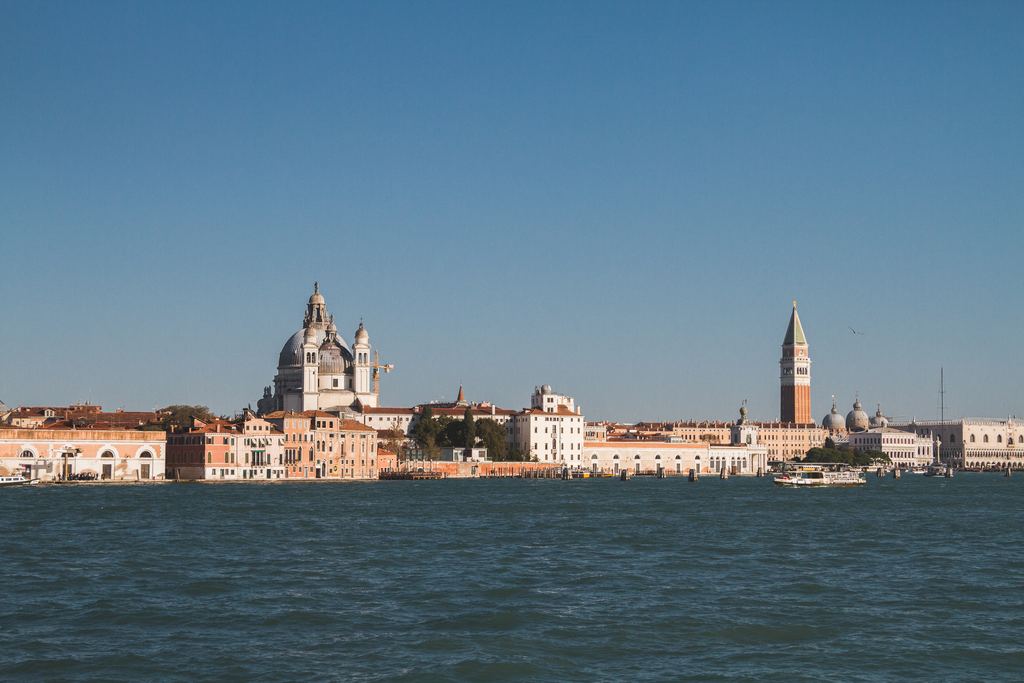
The palazzo that holds them
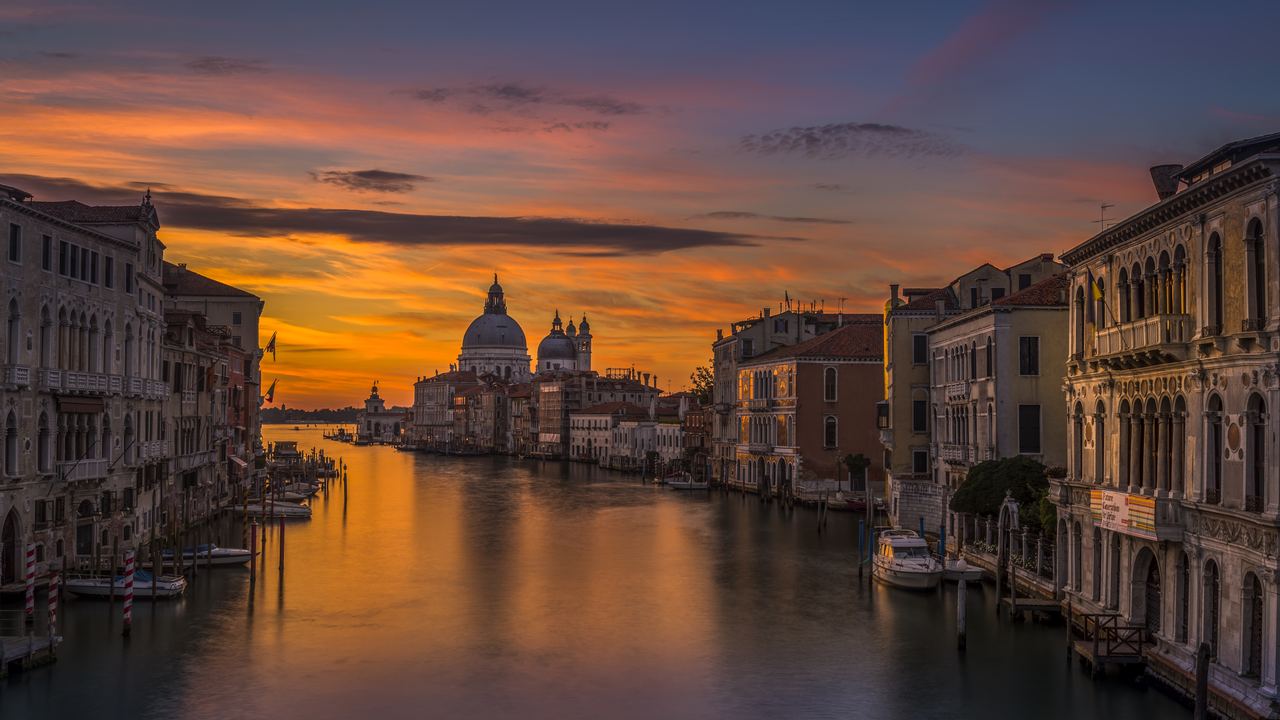
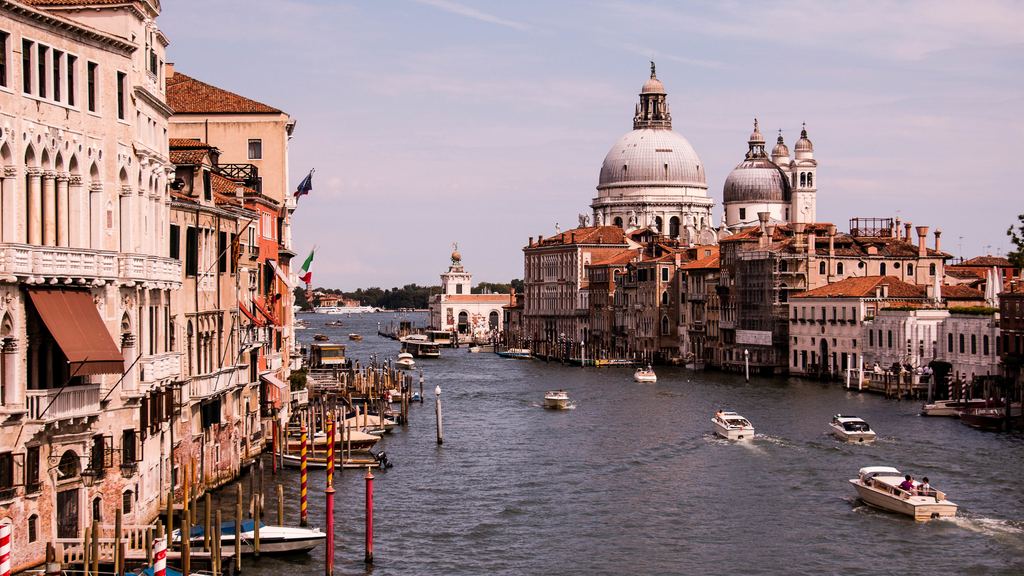
The collection lives in Palazzo Venier dei Leoni, commissioned by the Venier family in 1749 from the architect Lorenzo Boschetti. Only the first of its five planned floors was built, which is why it sits low and wide on the Grand Canal between the Accademia and the Salute. The museum says the name probably comes from the lion heads in Istrian stone at water level on the facade, though it also notes that a lion was once kept in the garden. The marchesa Luisa Casati rented the palace until 1924. Peggy bought it in July 1949 and lived in it for thirty years.
The museum gives its address as Dorsoduro 701, on the Grand Canal between the Accademia Bridge and the church of the Salute.
How to use this list on the day
Open the museum's page for each work the morning you go, and read the status line. Screenshot the table above; the objects are worth reading in date order even if you meet them in a different order. Since the rooms are not published, expect to find some by asking the gallery staff, and expect to pass others on the way.
Two rules affect how you look. The museum allows photographs for personal, non-commercial use without flash, and bans tripods and selfie sticks. Large bags, backpacks and suitcases are not allowed and there are free lockers at the ticket desk (museum visit page, checked 3 November 2026). Our what to bring page covers the rest, and tickets, discounts and city passes holds the prices. For hours and tours of the museum, see our Peggy Guggenheim Collection page.
If you like the idea of arranging what you see by movement rather than by museum, our art movements primer and the comparison of what hangs where across the three museums are the next stops.
Questions about the works
Is Pollock's Mural at the Peggy Guggenheim Collection?
No. Peggy commissioned Mural in 1943 and gave it to the University of Iowa, a gift the museum's page dates to 1948. The Venice collection has other Pollocks, including Alchemy, which the museum marked on view on 3 November 2026.
Is there a Dalí on view in Venice?
Not on 3 November 2026. The collection includes Birth of Liquid Desires (1931-32) and an untitled work of 1931, but the museum marked no Dalí on view that day.
Which room is each work in?
The museum's object pages say whether a work is on view but not where, so we do not name rooms. Ask the gallery staff on the day.
Are these ten always on view?
There is no guarantee. All ten were marked "On view" on 3 November 2026, but works rotate and travel. Check the museum's page for the work before you plan around it.
Can I photograph the works?
The museum allows photographs for personal, non-commercial use without flash, unless a sign says otherwise. Tripods and selfie sticks are banned (checked 3 November 2026). See our what to bring page.
Did Calder make Silver Bedhead for Peggy's bed in Venice?
It cannot have been made for a bed in the palazzo: the museum and the Calder Foundation date it to 1943, and Peggy bought the palazzo in July 1949. Some secondary sources say 1945-46, in New York, which still predates Venice.
How long does it take to see all ten?
We found no typical visit length published by the museum, so we do not claim one. Plan by the number of works rather than by minutes.
Do these works belong to the museum or to someone else?
The credit line on each page reads "Peggy Guggenheim Collection, Venice (Solomon R. Guggenheim Foundation, New York)." They belong to the Foundation, which received Peggy's collection in 1976.
Keep planning
Pages that pick up where this list stops.
Tours of the Peggy Guggenheim Collection
Third-party tours and tickets for the museum in Venice.
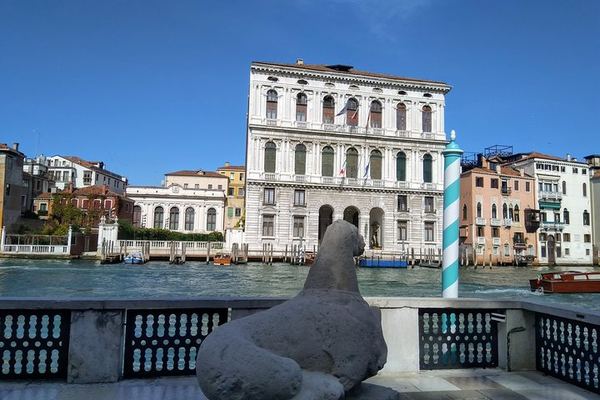
Private Peggy Guggenheim Art Historian Tour, Tickets Not Included, 2 Hours
A private two-hour tour led by an art historian, covering the garden and the Grand Canal terrace. Entry tickets are bought separately, ideally online.
Private Peggy Guggenheim Collection Tour with Skip-the-Line Tickets, Up to 6
A private guided visit to the Peggy Guggenheim Collection for up to six travelers, with skip-the-line tickets included and wheelchair access throughout.
Private Peggy Guggenheim Tour with Entry Ticket and Dorsoduro Walk, 2 Hours
Two hours with a private guide: entry ticket included, then a walk through Dorsoduro. Guiding in German, English, Italian, French or Spanish. Groups up to 15.
Ratings collected by Viator and Tripadvisor
Data verified on . Object pages of guggenheim-venice.it and calder.org, read 3 November 2026. Works can leave the walls; check the museum's page first. Editorial Policy