
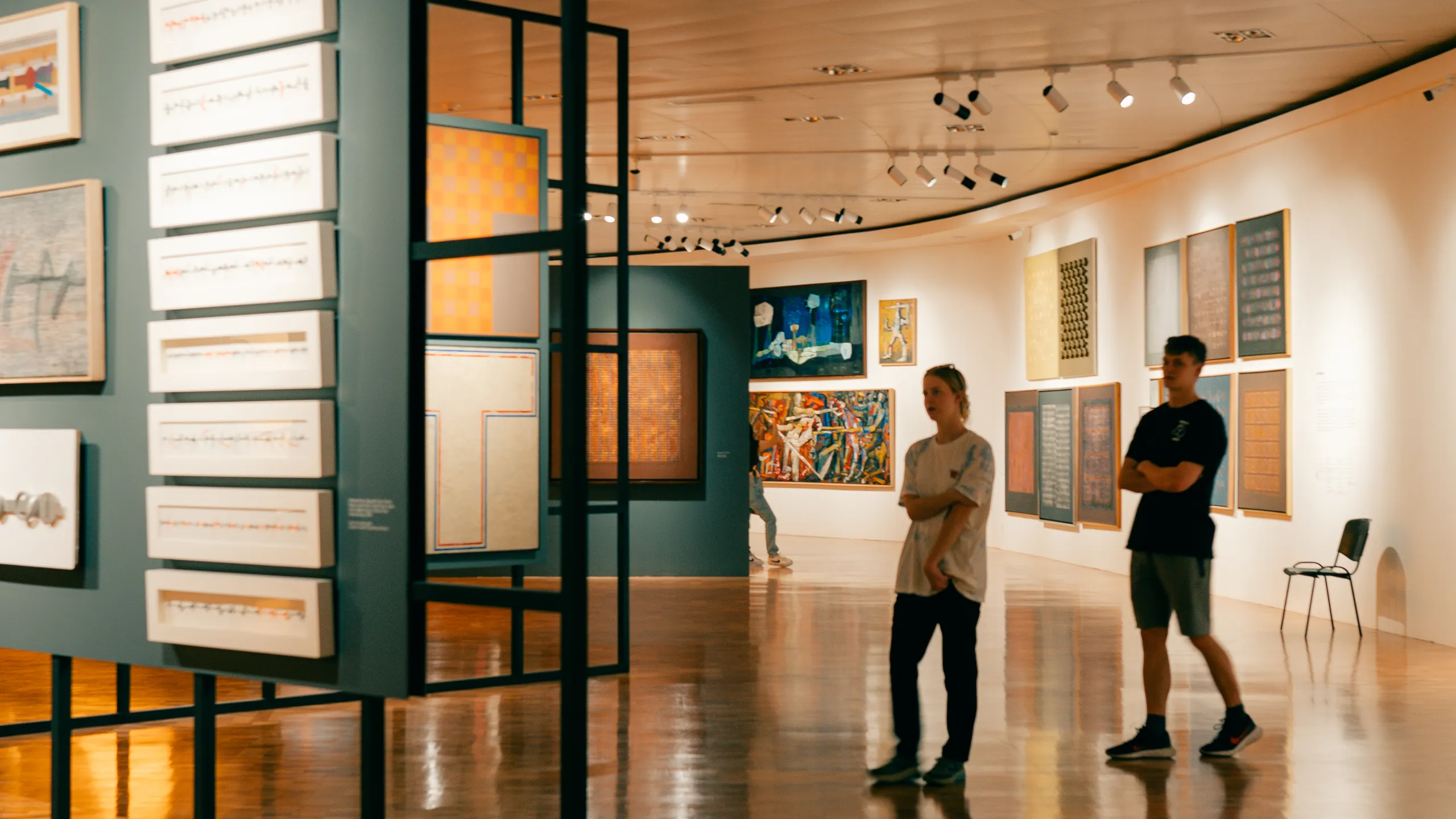
Art movements at the Guggenheim come down to about ten, and the collections are strongest in the ones that run from non-objective painting in the 1910s to Minimalism and Conceptual art in the 1960s. This primer walks through them in roughly chronological order: what each one means in plain words, what to look at in a gallery, which artists are in the Foundation's collections, and how to spot the style when the wall label is far away. The definitions are our paraphrases of Tate's Art Terms pages, which we read on 3 November 2026. This site is independent and not affiliated with the museums or the Foundation.
One caution before the list. The Guggenheim website's artist pages list works owned by the Foundation as a whole, meaning New York, Venice and Bilbao together, and they do not say where a work hangs or whether it is on view at all. So below, "in the collections" means owned, not "on the wall this week". Where a single museum's own page confirms a work is on view, we say so and date it. Rotations change, and the sibling guide What Hangs Where explains how the three museums avoid repeating each other.
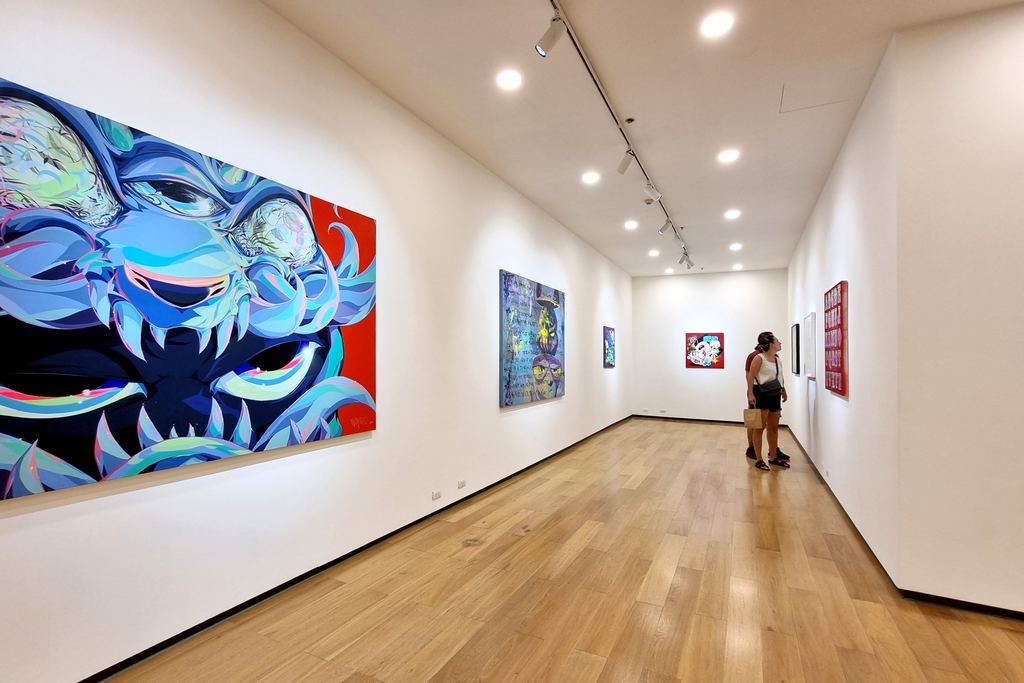
Do not try to match every label to a movement. Pick two or three, learn what they look like, and let the rest wash over you.
1. Non-objective art: where the museum began
In plain words. Tate describes non-objective art as a kind of abstract art, usually but not always geometric, that aims at simplicity and purity. There is no landscape or figure hiding in it: lines, colors and shapes are the subject. Tate names Kandinsky, Malevich and the sculptor Naum Gabo as pioneers.
What to look at. Edges, circles, floating forms, and how the colors push against each other. Ask what the picture would lose if it were hung sideways.
In the collections. This is the founding idea. The museum opened in 1939 as the Museum of Non-Objective Painting under Hilla Rebay, and the Foundation says more than 150 works by Kandinsky have entered its holdings, starting with Composition 8 (1923), bought in 1930. The artist page also lists White Center (1921), Blue Painting (1924), Several Circles (1926) and Upward (1929). Venice's own page marked Upward as on view on 3 November 2026. Venice also holds an untitled Malevich from about 1916.
How to recognize it. No recognizable subject, flat or floating color, and titles that read like music (Composition, Improvisation) or like a direction (Upward).
2. Impressionism and Post-Impressionism: the Thannhauser rooms
In plain words. Tate says Impressionism began in France in the nineteenth century, with painters working outdoors, quickly, in short broken strokes, to catch changing light on landscapes and everyday scenes. The first group show was in Paris in 1874. Post-Impressionism covers what came after about 1886, when Cézanne, Gauguin, Seurat and van Gogh each took the style somewhere different. The critic Roger Fry coined the label in 1910.
What to look at. Brushwork you can see from two steps back, and the way Degas crops a figure like a snapshot.
In the collections. In New York the Thannhauser Collection is on long-term display, and the museum's own page highlights Degas, Manet, Van Gogh and more than thirty Picasso. The museum's audio guide of key works includes Manet's Before the Mirror (1876), Degas's Dancers in Green and Yellow (about 1903) and Pissarro's The Hermitage at Pontoise. The online collection also lists Cézanne's Bibémus and Seurat's Place de la Concorde, Winter, but it does not say what is hanging today, so check the room map.
How to recognize it. Impressionism looks quick and bright; Post-Impressionism looks built, with outlines, dots or heavy color applied on purpose.
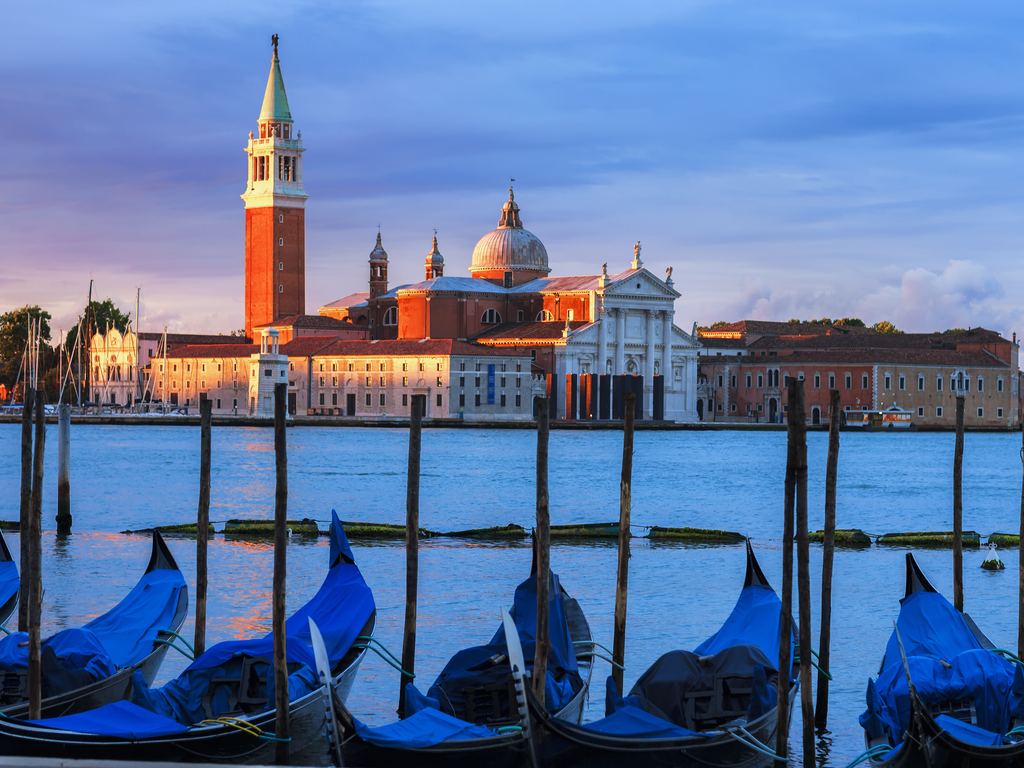
Venice is the place for the early twentieth century
The Peggy Guggenheim Collection sits in an unfinished eighteenth-century palazzo, and most of the works in sections 3 to 6, from Cubism to Abstract Expressionism, have a Venice page of their own. Peggy bought pictures in a hurry in Paris in 1939 and 1940, and her taste ran to Surrealism and abstraction. The ten-works guide goes deeper.
3. Cubism: one object, several points of view
In plain words. Tate says Cubism was invented around 1907 and 1908 by Picasso and Braque. It shows a subject from several angles at once, which gives the picture a fractured look. The analytic phase runs from about 1908 to 1912, the synthetic phase from about 1912 to 1914.
What to look at. A guitar, violin or bottle broken into planes, with browns and grays, and pasted paper or lettering in later works.
In the collections. The Foundation's pages list Braque's Violin and Palette (1909), Piano and Mandola (1909 to 1910) and The Clarinet (1912), plus Picasso's Glass, Pipe and Packet of Tobacco (1914). They do not say where those hang. A trap: Picasso's The Studio (1928) and On the Beach (1937) in Venice are later pictures, and the museum does not sell them as Cubism.
How to recognize it. Look for a still life that you cannot quite assemble in your head. If the shapes are curvy and the colors loud, you are probably past Cubism.
4. Futurism: speed as a subject
In plain words. Tate describes Futurism as an Italian movement launched by the poet Filippo Tommaso Marinetti in 1909. It celebrated machines, industry and motion, turned its back on the past, and borrowed Neo-Impressionist and Cubist techniques to show movement.
What to look at. Repeated limbs, streaks, and fragmented dancers, as if a photo were taken with a slow shutter.
In the collections. Gino Severini's Sea=Dancer (1914) is among the Venice key works listed on the museum's pages. It is a favorite example because Futurism is easy to forget in a collection built around Paris and New York.
How to recognize it. Movement is the point. If the picture seems to vibrate, you are probably looking at it.
5. Surrealism: dreams with a straight face
In plain words. Tate says Surrealism tried to change how people experience life by balancing logic with the unconscious and dreams. Guillaume Apollinaire used the word in 1917, and André Breton published the Surrealist Manifesto in 1924.
What to look at. Ordinary objects in the wrong place or at the wrong scale, painted so smoothly that you almost believe them.
In the collections. Venice is the home base. On 3 November 2026 the museum's pages showed Magritte's Empire of Light (1953 to 1954) and Ernst's Attirement of the Bride (1940) on view. Ernst used decalcomania, a technique the museum credits to Oscar Domínguez. Two famous names are in the collection but were not on view that day: Dalí's Birth of Liquid Desires and Giacometti's Woman with Her Throat Cut. De Chirico's The Red Tower (1913) came before Surrealism, though it influenced it.
How to recognize it. Look for dream logic with no wink. A melting watch is Dalí in the popular imagination; a day sky over a night street is Magritte.

6. Abstract Expressionism: big paintings, big gestures
In plain words. Tate describes it as American abstract painting of the 1940s and 1950s, usually gestural and spontaneous, made mostly by artists in New York. It splits into action painters such as Pollock and de Kooning, and colour field painters such as Rothko, Newman and Still, who used large areas of color to invite contemplation.
What to look at. Look at the surface from close up for drips and scrapes, then step back to see what the field of color does to the room.
In the collections. Peggy Guggenheim's Art of This Century gallery, opened in New York on 20 October 1942, gave early shows to this circle, and the museum says the 1948 Biennale display showed Gorky, Pollock and Rothko in Europe for the first time. In Venice, Pollock's Alchemy (1947), Croaking Movement and Circumcision (both 1946) were listed on view on 3 November 2026, while The Moon Woman and Enchanted Forest were marked not on view. Pollock's Mural (1943) is not in Venice: Peggy gave it to the University of Iowa, a gift the museum's page dates to 1948. The Foundation's pages also list Rothko and de Kooning works, and Bilbao's collection pages name a Rothko and Motherwell's Iberia.
How to recognize it. If it is huge, abstract, and has no hard geometry, you are in the right neighborhood. Drips mean action painting; a quiet block of color means colour field.
7. Pop Art: the supermarket on the wall
In plain words. Tate says Pop Art started in Britain in the mid-1950s and in America in the late 1950s, peaking in the 1960s. It drew on movies, ads, packaging, pop music and comics, and challenged what counted as art.
What to look at. Flat color, repetition, comic dots, and subjects you could buy.
In the collections. The Foundation's pages list Warhol's Orange Disaster #5 (1963), Flowers (1964), Electric Chair (1971) and One Hundred and Fifty Multicolored Marilyns (1979), and Lichtenstein's In (1962), Grrrrrrrrrrr!! (1965) and Girl with Tear I (1977). Again, they give no location. Do not infer Pop at Bilbao from a file name on its press site: we did not find a Warhol work attributed there.
How to recognize it. Look for printed or mechanical-looking surfaces and cheerful colors with a dark subject underneath.
8. Minimalism: what you see is what you see
In plain words. Tate calls Minimalism a severely reduced abstraction, centered in the United States in the 1960s, built from plain geometric forms. The materials and the object itself are the subject, which Frank Stella summed up as "What you see is what you see." Tate names Andre, Flavin, Judd, LeWitt, Martin and Morris.
What to look at. Edges, spacing, the shadow on the floor, and your own shadow moving across a surface.
In the collections. The Foundation's pages list six untitled works by Donald Judd (1968 to 1973), seven by Dan Flavin including greens crossing greens (to Piet Mondrian who lacked green) (1966), Carl Andre's 5 x 20 Altstadt Rectangle (1967) and Sol LeWitt's Wall Drawing #146 (1972). The Foundation's pages do not say whether the Flavin and Judd pieces are on view or where, so we cannot say where to find them this month.
How to recognize it. Industrial materials, repeated units, no brushwork, and no story. If you feel like asking what it means, ask what it does to the room instead.
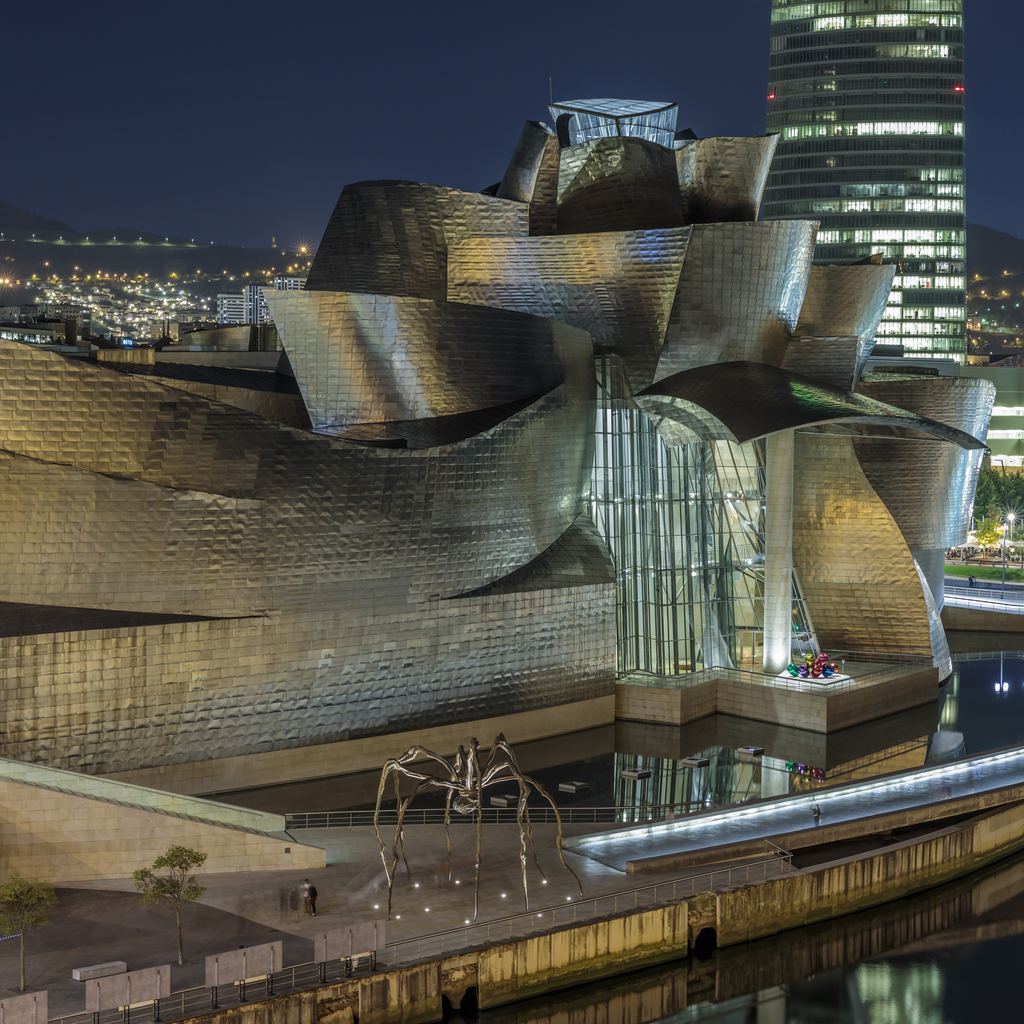
Bilbao is the place for scale
Bilbao's strength is large contemporary work, much of it built for Gehry's galleries. Its collection pages list Serra's The Matter of Time, and the museum has shown a Kusama mirrored room, and the building itself is about 33,000 thin titanium sheets. See Gehry's Bilbao, checked for the building.
9. Conceptual art: the idea first
In plain words. Tate says Conceptual art puts the idea ahead of the finished object. It is usually dated from the mid-1960s to the mid-1970s, and Sol LeWitt's 1967 article was the first to use the term for the movement. Tate notes that Duchamp's 1917 Fountain is cited as the first conceptual artwork.
What to look at. Text on a wall, a diagram, a set of instructions, a drawing that someone else executes.
In the collections. The Foundation's pages list Lawrence Weiner's A STAKE SET (1969), THE RESIDUE OF A FLARE IGNITED UPON A BOUNDARY (1969) and EARTH TO EARTH ASHES TO ASHES DUST TO DUST (1970), and LeWitt's wall drawings. Weiner's works are statements, so what you see on a wall is the text; whether one is installed now is a question for the museum.
How to recognize it. Words as the artwork. A label that says "installed by" instead of "painted by" is a clue.
10. Installation and land art: art you walk into
In plain words. Tate describes installation art as large constructions, often made for a place or a limited time, that work as one experience with the viewer at the center. Land art, from the 1960s and 1970s, uses natural settings, either by reshaping the ground or building with stones and sticks. Tate's best-known example is Robert Smithson's Spiral Jetty (1970).
What to look at. Whether you can enter it, walk around it, or only look in. Notice how the room changes your pace.
In the collections. Bilbao's collection page for Richard Serra's The Matter of Time (1994 to 2005) describes eight weathering-steel sculptures in Gallery 104, a permanent part of the collection. The museum lists Yayoi Kusama's Infinity Mirrored Room (2020) as a loan from a gallery, and the Foundation lists Cai Guo-Qiang's Cry Dragon/Cry Wolf: The Ark of Genghis Khan (1996). For Smithson, the Foundation's pages list Yucatan Mirror Displacements (1 to 9) (1969) and Hotel Palenque (1969 to 1972), which are works and documentation for gallery viewing. Spiral Jetty is a site in Utah, so do not plan a land art visit around the Guggenheim.
How to recognize it. Ask whether you are meant to look at an object or stand inside a situation. In an installation you are part of the piece.
Summary table: what to look for and where to start
| Movement | What to look for | Where to start |
|---|---|---|
| Non-objective art | Pure shape and color, no subject | Kandinsky's Upward (Venice page said on view) |
| Impressionism and Post-Impressionism | Visible brushwork, broken light | New York's Thannhauser rooms |
| Cubism | One object from many angles | Braque and Picasso; check which museum shows them |
| Futurism | Speed and motion | Severini's Sea=Dancer, Venice |
| Surrealism | Dream scenes painted plainly | Venice: Magritte and Ernst |
| Abstract Expressionism | Huge canvases, gesture or color field | Pollock's Alchemy, Venice |
| Pop Art | Flat color, mass-media subjects | Warhol and Lichtenstein, ask the museum for location |
| Minimalism | Plain geometry, industrial material | Flavin and Judd, rotation permitting |
| Conceptual art | Idea as the work, often text | Weiner and LeWitt wall works |
| Installation and land art | Art you enter, site-specific | Serra's The Matter of Time, Bilbao |
How these movements fit the three museums
New York leans on the founding story: non-objective painting, the Thannhauser Impressionists, and the Minimalism and Conceptual holdings. Venice is the best place for the early twentieth century, from Cubism and Futurism through Surrealism and early Abstract Expressionism. Bilbao is built for large contemporary work. That split is a generalization from the museums' own pages, not a promise about any day's hang. Abu Dhabi opens on 11 December 2026 and has said its collection runs from 1960 to today, so it is not on this list yet; see what we know about Abu Dhabi.
If you only have time for one museum, Venice suits a first primer because the collection is small enough to take in during one visit and the museum's pages tag each work as on view or not. Start with the Venice category.
Art movements at the Guggenheim: quick answers
Which art movement is the Guggenheim most associated with?
Non-objective painting. The museum opened in 1939 as the Museum of Non-Objective Painting, and the Foundation says more than 150 Kandinsky works have entered its holdings.
Can I see Jackson Pollock in Venice?
Some, not all. On 3 November 2026 the Venice museum listed Alchemy, Croaking Movement and Circumcision as on view. Mural, which Peggy commissioned in 1943, is at the University of Iowa.
Which Impressionist and Post-Impressionist names does the museum itself highlight?
The museum's Thannhauser page highlights Degas, Manet, Van Gogh and more than thirty Picasso. Cézanne and Gauguin are in the online collection, but that does not say what is hanging today.
Where can I see Dalí?
Venice owns Dalí works, but the museum's page marked Birth of Liquid Desires as not on view on 3 November 2026.
Are the Picassos in Venice Cubist?
Not by the museum's account. The Studio (1928) and On the Beach (1937) are later work. The Cubist period Tate dates to about 1908 to 1914.
How do I know if a work I want is on view?
Check the specific museum's own artwork page or ask at the desk. Foundation-wide artist pages list ownership, not display.
Is this the best place to learn what a movement is?
For a quick start, yes. For depth, read Tate's Art Terms pages, which we paraphrase here and link in our sources.
Is this site run by the museum?
No. guggenheim.museum is independent and not affiliated with the museums or the Foundation.
Plan the visit around the art
Pick a museum, then look at tours that include entry.
Tours to pair with the Foundation collection

Electric Pedicab NYC Tour With Flexible Stops, Times Square to Fifth Avenue
The driver is the guide and the route is open: riders add or skip stops between Times Square, Fifth Avenue, Rockefeller Center and the Empire State Building.

Guided Pedicab Tour of Celebrity Homes and Film Locations Around Central Park
Guides point out who lived where around the park, from the Dakota to the Essex House, and which scenes were shot at the Boathouse, Bow Bridge and the Plaza.

Private Central Park Pedicab Tour With Walking Stops, 1 to 3 Hours
A private pedicab ride through Central Park with 5-minute walking stops at Strawberry Fields, Bethesda Fountain and Bow Bridge, in 1, 2 or 3 hour versions.
Ratings collected by Viator and Tripadvisor
Data verified on . Definitions paraphrase Tate Art Terms. Works: Foundation and museum pages, 3 Nov 2026. Editorial Policy